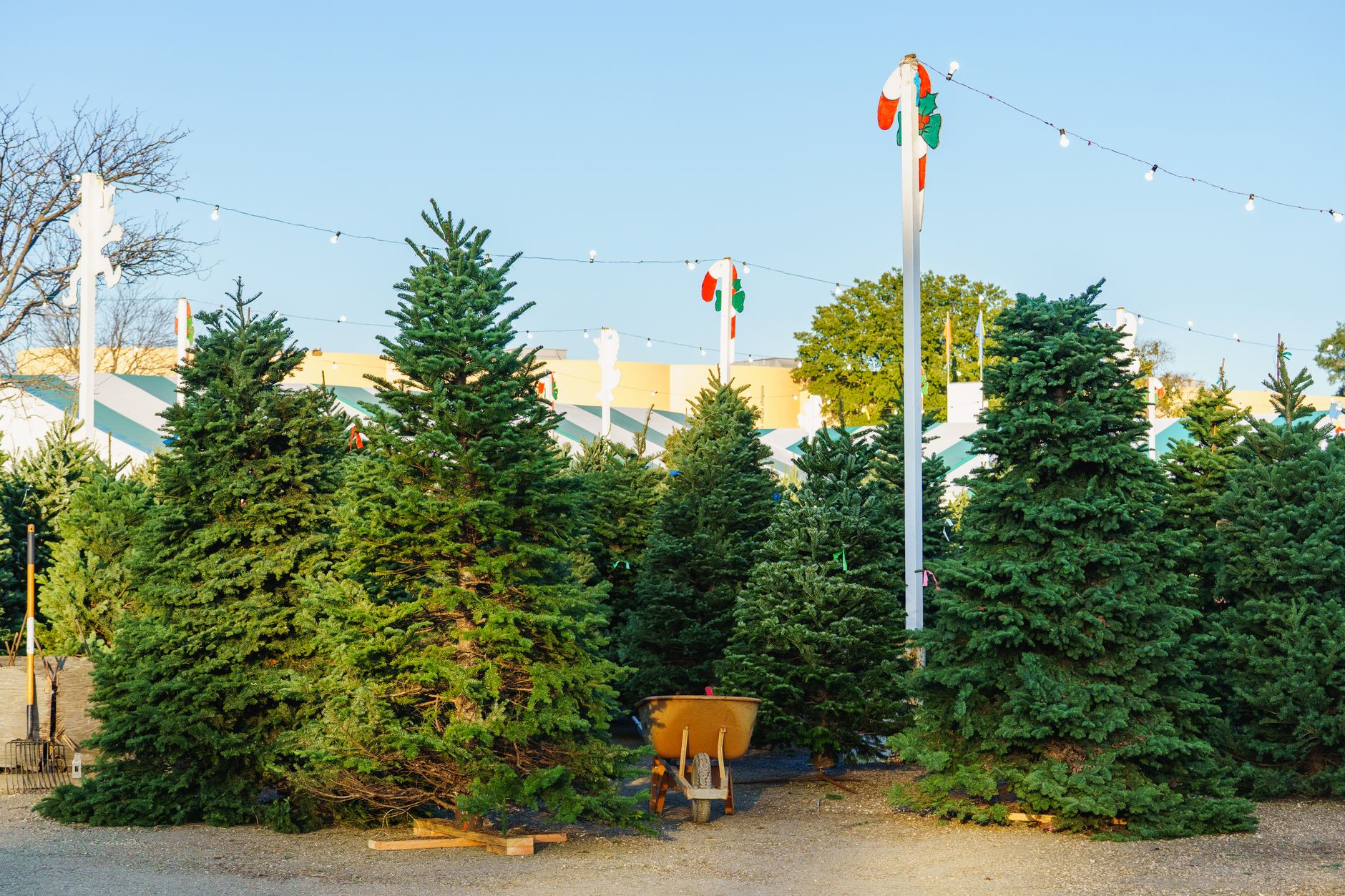
Most people pick a Christmas tree the way they pick a pumpkin: by shape, size and a gut feeling. That works, but a little knowledge of the species can save you a lot of vacuuming. Trees differ in how long they hold their needles, how strongly they smell, how soft the branches feel and how much weight they can carry. A tree with stiff, upturned branches will hold a heavy glass ornament that a droopy one will not, and a tree with almost no scent is a gift to anyone who sneezes in the lot.
This guide is about the choice. Once the tree is home, our guide to Christmas tree care takes over, our troubleshooting guide helps when something goes wrong, and our Flower Care Guide collects every care article in one place. We write from the Pacific Northwest, where the trees are grown, so the firs come first.
🔍 Fir, Spruce or Pine? A Two-Minute Field Guide
Before the species names, it helps to know the family. Look at one branch and you can usually tell:
- True firs have flat, soft, blunt needles that grow along the twig or curve upward. They do not roll between your fingers. Noble, grand, Nordmann and Fraser are all true firs.
- Spruces have stiff, sharp, four-sided needles that grow all around the twig. They roll between your fingers and they prick. Colorado blue spruce is the one you will see most often.
- Pines have long needles that grow in bundles, which you can pull apart. Scotch pine is the usual Christmas pine.
- Douglas fir is the odd one out. Despite the name it is not a true fir. Its soft needles stick out in every direction, like a bottlebrush, and the twig is hidden beneath them.
🌲 The Pacific Northwest Four
If your tree comes from an Oregon farm, it is very likely one of these.
Noble fir is the one some call the “king of Christmas trees,” and it is the most widely grown in Oregon: more than half of the state’s Christmas trees are nobles. The branches are evenly spaced and stiff, with room between them to show off an ornament, and the needles turn upward, in dark green to bluish tones. Needle retention is excellent, so a noble keeps looking good for a long time. If you own heavy or sentimental ornaments, this is your tree.
Douglas fir has been a favorite across the country for about a century, and it is often the most affordable. The needles are about three-quarters of an inch to an inch and a half long, dark to bluish green, and soft. Crush one and you get a strong, sweet scent. It has a uniform shape and good keepability, and its softer branches suit lights and lighter ornaments better than heavy ones.
Grand fir is the most fragrant of the lot. It is native to the Pacific Northwest and grows fluffy and round, with plenty of branches and plenty of glossy dark green needles that lie flat. If you want the house to smell like a forest the moment the tree comes through the door, grand fir is the one. It is also the least forgiving if the stand runs dry, since it cannot go as long without water as other species and still recover, so it rewards a cut-and-water routine from day one.
Nordmann fir has stiff branches like a noble, glossy dark green needles with two silvery bands underneath, and a soft feel. It keeps its needles very well and, unlike most of the others, it has little scent. That makes it a favorite for anyone with allergies or a sensitive nose. Turkish fir, a close relative, grows a little faster and has slightly finer needles, and the two are hard to tell apart. Both have been a small but growing share of Oregon’s crop.
🎄 Other Trees You Will Meet
Lots and big-box stores also sell trees from elsewhere. Three are common:
- Fraser fir. Grown mostly in the East, Fraser is the benchmark for keeping its needles, with soft dark green needles that are silvery underneath and strong, upturned branches that hold large ornaments. The scent is pleasant and moderate.
- Scotch pine. A pine that is famous for holding its needles even when it gets dry, with stiff branches that suit both light and heavy ornaments and a long-lasting pine scent. It is also a budget-friendly pick.
- Colorado blue spruce. Prized for its silver-blue color and a neat pyramid shape, with very stiff branches that carry the heaviest decorations. The needles are very sharp, so it is not the best tree for small children or pets, and a crushed needle smells resinous rather than sweet. It also drops its needles quickly if it dries out.
⚖️ Matching the Tree to Your Home
Instead of asking which tree is best, ask what you need it to do.
- Heavy ornaments: noble fir, Fraser fir, Scotch pine or blue spruce, all with stiff branches.
- The strongest scent: grand fir first, then Douglas fir.
- A sensitive nose or allergies: Nordmann fir, which has little scent.
- Small children or pets: choose soft needles, such as Douglas, Nordmann or Fraser, and skip the blue spruce.
- A tree that has to last into January: noble, Nordmann, Fraser or Scotch pine. Choose a fresh one and keep it watered, whichever you pick.
- Buying early: avoid the species that give up first, such as grand fir, unless you plan to cut it fresh yourself.
- A budget: Douglas fir and Scotch pine are usually among the most affordable.
Whatever the species, look for freshness first. A fresh grand fir beats a tired noble every time, and our care guide covers the needle test and the bend test. A lot that can tell you when its trees arrived, and what species it is selling, is a good sign.
🧰 Artificial Trees: What to Know
Most households that decorate a tree now use an artificial one, and for good reasons: no watering, no needles on the carpet, and the same tree every year. A few things make a difference when you shop for one.
- Needle material. Cheaper trees use flat PVC needles. More expensive trees use polyethylene, which is molded from real branches and looks more natural, and often mixes the two. Polyethylene tips need gentle handling so they hold their shape.
- Branch type. Hinged branches fold down and spring out, while hook-in branches are fitted one at a time. Hinged trees set up faster.
- Lights. A pre-lit tree saves an afternoon, but when a section goes dark, it can be a hassle to fix. A tree without lights costs less and is easier to repair.
- Fire safety. Look for a tree whose label says it is fire retardant, and use lights tested by an independent laboratory. Keep it at least three feet from any heat source, like any other tree.
Fluffing is the whole secret. A tree that comes out of the box looks flat until you spread each branch and tip, working from the bottom up and from the center outward. Give it time, and a thin-looking tree turns full.
Storage decides how long it lasts. Make sure the tree is dry before it goes into the box. Store it in a cool, dry place, not a damp basement or a garage that swings from freezing to hot, and do not crush the branches. A tree that is cared for can serve for many years, and the longer you keep using it the better a deal it becomes, both for your wallet and for the planet. Estimates of how many years an artificial tree needs to break even with a fresh tree vary, but they all point the same way: keep it for a long time.
One note on the other side of the ledger. Fresh trees can be recycled into mulch unless they have chemical flocking, while an artificial tree cannot be recycled and generally ends up in a landfill. A real tree also supports a farm, and growers typically replant for every tree they cut. Either choice can be a good one. The worst choice is the tree that gets used once and thrown away.
🌿 What a Florist Does With the Leftovers
Fresh-cut fir and spruce branches are some of the best greenery there is for the holidays. When you trim the bottom of your tree, or lop off a branch to fit a corner, put the clippings in a vase of water on the mantel or tuck them into a wreath. Noble fir’s long needle life makes its branches a good bet for garlands. We cover which other greens are safe around pets in our guide to holiday flowers and greens.
Whichever tree you choose, choose it for what it will do in your home, then put a small arrangement of fresh flowers under or beside it. Evergreen and flowers go together better than most people expect.