
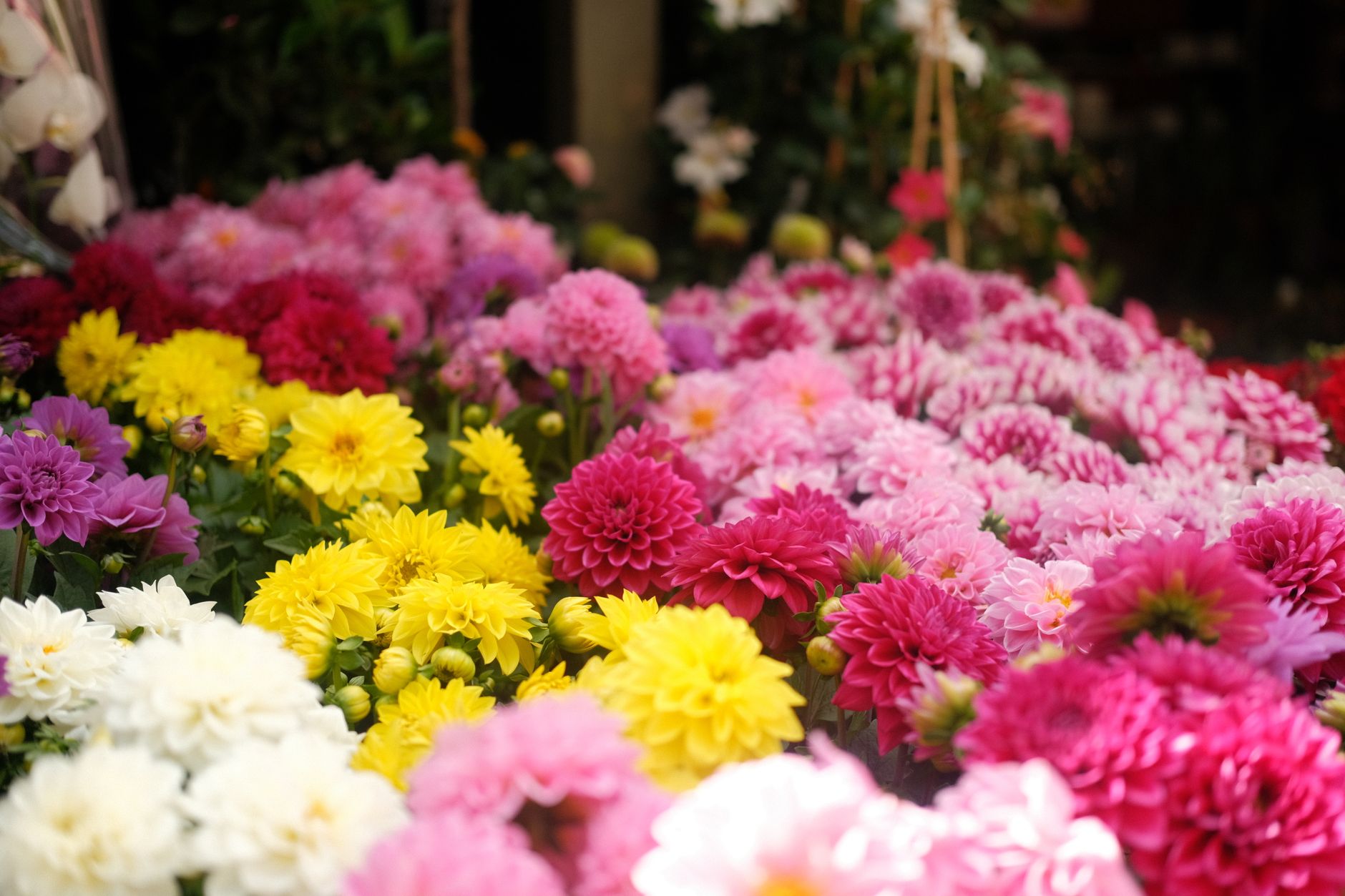
Every year there is a moment, somewhere around the middle of summer, when a flower shows up in cutting gardens and farm stands and florist coolers and quietly steals the entire season. It arrives late, after the peonies are a memory and the roses have had their first big flush. It comes in forms so varied and colors so deep that first-timers genuinely do not believe they are all the same flower. And once it hits its stride, it does not stop until the first frost knocks it down. We are talking, of course, about the dahlia — the undisputed cut-flower superstar of late summer, and the flower working florists get a little obsessed with every single year.
If you have ever seen a dinnerplate dahlia the size of a human face and audibly gasped, you already understand the appeal. But there is a lot more to this flower than the showstoppers. Here is everything you need to know about dahlias — where they come from, the astonishing range of forms, the honest truth about their vase life, and how to get the most out of their brief, glorious season.
🌼 What Exactly Is a Dahlia?
Dahlias (Dahlia species) are native to the highlands of Mexico and Central America, where they grow from tubers — fat underground storage roots, a bit like a potato. The Aztecs cultivated them long before Europeans arrived, using them for food, ceremony, and even medicine. Spanish botanists sent tubers back to Europe in the late 1700s, and the flower was named for Anders Dahl, an 18th-century Swedish botanist.
What happened next is one of horticulture’s great obsessions. Dahlias turned out to be almost endlessly variable, and breeders ran with it. Today there are tens of thousands of named cultivars in a dizzying range of sizes, forms, and colors — from blooms smaller than a coin to those enormous dinnerplates — making the dahlia one of the most diverse flowers on earth. That variability is exactly why florists never get bored of them.
🎯 The Forms: A Dahlia for Every Mood
The single most surprising thing about dahlias is that “dahlia” describes dozens of wildly different-looking flowers. A few of the forms worth knowing:
- Dinnerplate. The giants — blooms that can reach 10 to 12 inches across. One stem is practically an arrangement. These are the ones that make people gasp.
- Ball & pompon. Perfectly round, geometric, tightly-packed spheres of petals. Pompons are the miniature version. Impossibly tidy and beloved for their symmetry.
- Cactus & semi-cactus. Spiky, rolled, quill-like petals that give a starburst, slightly untamed look.
- Decorative. The classic full, layered bloom — the all-purpose florist workhorse.
- Waterlily. Softer, flatter, and more open, exactly like their namesake — elegant and understated.
- Single & collarette. Open-faced, daisy-like forms with a visible center — and the ones the pollinators love best.
Put a dinnerplate, a ball, and a cactus dahlia side by side and most people will not believe they are related. That range is a florist’s dream: a single flower type that can carry a whole arrangement or play a dozen supporting roles.
🌈 The Colors: Blush to Nearly Black
Dahlias cover nearly the entire color spectrum — soft blush and cream, hot coral, fiery orange, deep burgundy, and the coveted almost-black shades that designers prize for moody, dramatic work. About the only thing they do not do is true blue (a club they share with almost every flower). Many are bicolored, tipped, or streaked, and some shift color as they age. For arrangements built around a specific palette — a wedding, an event, a seasonal centerpiece — the dahlia is one of the most flexible flowers in the cooler.
⏳ The Honest Truth About Vase Life
Here is where we have to be straight with you, because a good florist always is: dahlias are gorgeous, but they are not the longest-lasting cut flower. Where a carnation might cruise for two weeks, a dahlia typically gives you four to seven days in the vase. They are thirsty, their hollow-ish stems can be finicky, and a hot room shortens their run fast. This is not a flaw so much as a trade-off — you accept a shorter show in exchange for blooms nothing else can match.
The good news is that a few simple habits stack the odds in your favor:
- Cut or buy them at the right stage. Dahlias barely open more after cutting, so they should already be nearly fully open. A tight dahlia will not develop — it will just fade.
- Use cold, clean water and change it often. Dahlias foul their water quickly. Fresh water every day or two makes a real difference — the same basic discipline behind all our fresh-cut care tips.
- Re-cut the stems and strip low leaves. A fresh angled cut and no foliage below the waterline slows the bacteria that clog the stem.
- Keep them cool and out of direct sun and heat. Dahlias are a cool-cooler flower — warmth is their enemy, which is one of the classic mistakes people make with flowers in summer.
Do those four things and you will get the full, honest run out of them — and every day of it is worth it.
🌅 When Is Dahlia Season?
This is the part that matters most right now: dahlia season is late summer into fall. They start hitting their stride in July, ramp up hard through August and September, and keep going right up until the first hard frost ends the show. That makes mid-to-late summer their absolute peak — and it is exactly why they are all over local bouquets this time of year, and why you see them front and center in what’s in season right now. If you love dahlias, this is the window. Do not wait for October — by then the season is already closing.
Both Oregon and California are dahlia country. The cool, bright Pacific Northwest summers in particular produce jaw-dropping dahlias, and local growers up and down the West Coast spend all year building toward these few months. When your florist has a bucket of just-cut local dahlias in the back, that is the good stuff — seasonal, fresh, and grown right down the road.
💛 Why Florists Get a Little Obsessed
So why the obsession? Because the dahlia is the flower that has it all except longevity — and the fleeting quality is arguably part of the magic. It offers more forms, more colors, and more sheer drama than almost anything else in the cooler. It peaks exactly when the garden is at its most generous. And it rewards the little bit of care it asks for with blooms that genuinely stop people in their tracks.
Every year, when the first local dahlias come in, there is a quiet buzz in the shop. We know the best stretch of the cutting season has arrived. So if you want to experience the flower that defines late summer — those dinnerplates, those inky burgundies, those perfect little pompons — now is the moment. Come see what is in the cooler, and let us build you something the color of the season.