
We spend our days surrounded by flowers that make people happy — birthdays, apologies, anniversaries, the occasional just-because Tuesday. So it feels a little strange to write this one. But every florist eventually learns the uncomfortable flip side of the job: some of the most beautiful flowers ever grown are also, quite literally, killers. Not metaphorically. Not “handle with care because of allergies.” Actual, documented, historically significant poisons — some of which have changed the outcome of empires, and one of which was used in a real Cold War assassination on a London bridge.
Here is the story of flowers that have spent centuries being simultaneously gorgeous and genuinely dangerous, and a note on which ones might already be growing in your own Tigard backyard.
🌊 Oleander: The Plant Roman Soldiers Allegedly Learned to Fear the Hard Way
Oleander is one of the most widely planted ornamental shrubs on earth — pink, white, or red blooms, glossy evergreen leaves, thriving in exactly the kind of hot, dry conditions that kill off less determined plants. It is also, in every single part — leaves, stems, flowers, sap, even the smoke if you burn it — loaded with cardiac glycosides potent enough to stop a human heart. A persistent (if hard to verify) piece of military folklore claims Napoleon's soldiers in Spain died after skewering meat on oleander branches to cook over a campfire, unaware the wood itself was doing the poisoning. Whether or not that specific campfire ever happened, the underlying chemistry is completely real, and modern poison-control centers still field oleander cases every year from people who assumed “pretty landscaping shrub” meant “harmless.”
👑 The Roman Emperor and the Flower That Finished the Job
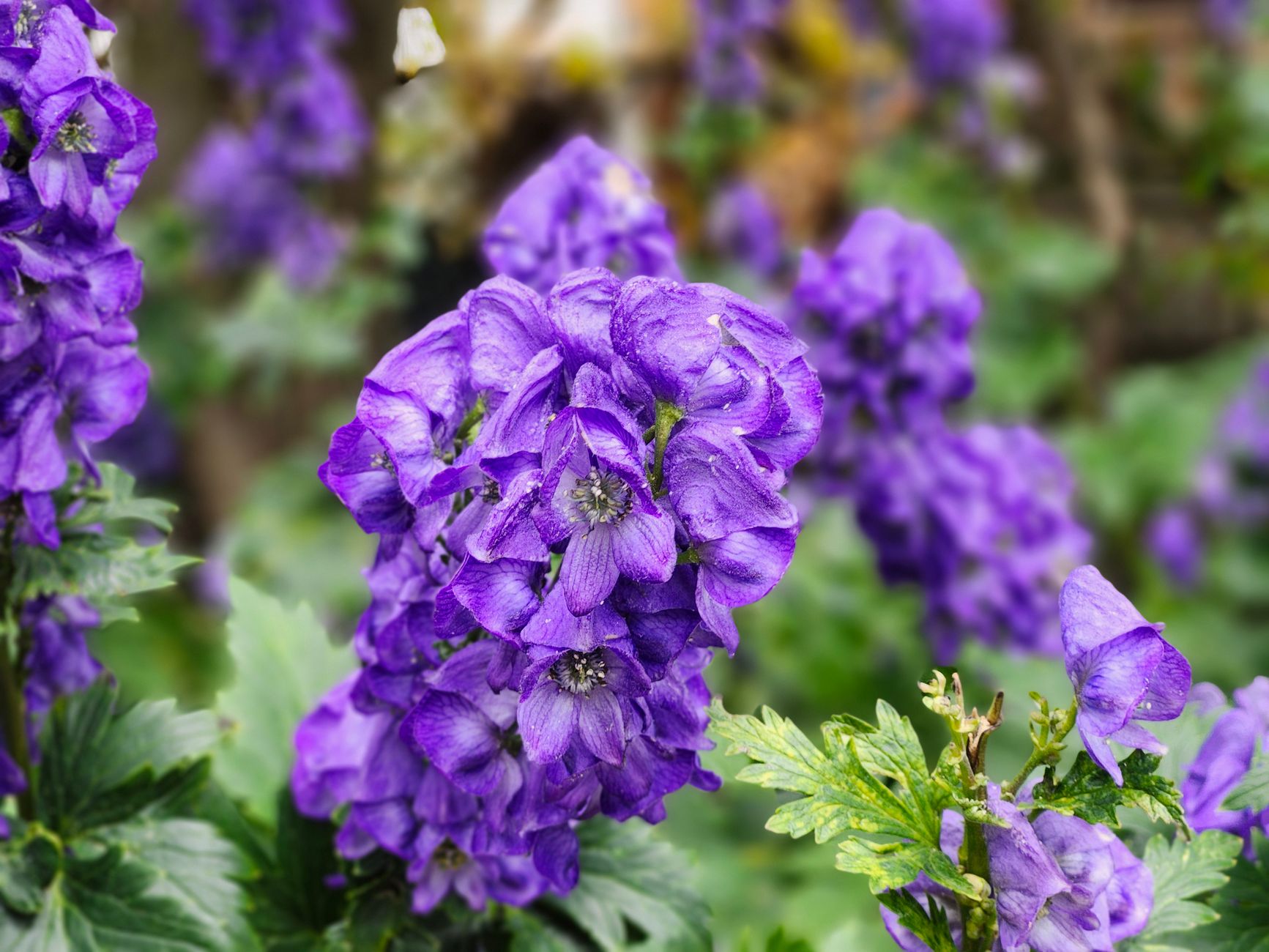
According to the Roman historians Tacitus and Suetonius — writing after the fact, with their own political motives, so take this with the appropriate grain of ancient-history salt — the emperor Claudius was poisoned in 54 AD on the orders of his wife Agrippina, clearing the path for her son Nero to take the throne. The famous version of the story centers on a plate of poisoned mushrooms. But the more interesting detail, at least for our purposes, is the reported follow-up: when Claudius took too long to die, his own physician is said to have finished the job with a second dose of aconite — a toxin extracted from the flower we now call monkshood or wolfsbane (genus Aconitum). Deep purple, hood-shaped, genuinely stunning in a late-summer garden border, and one of the most toxic ornamental flowers you can legally buy at a nursery. Even brief skin contact with the sap can cause numbness, and the same plant that may have helped end a Roman emperor's reign is sold today as a perfectly normal perennial.
☂️ The Umbrella Murder: A Cold War Assassination With a Flower-Derived Poison
This next one is not folklore. On September 7, 1978, Bulgarian dissident writer Georgi Markov was standing at a bus stop on Waterloo Bridge in London when he felt a sharp sting in the back of his leg. A stranger had brushed past him with an umbrella, apologized, and hurried into a taxi. Markov developed a high fever within hours and died four days later. A postmortem found a tiny pellet lodged in his leg — the umbrella had been engineered as a weapon, built to inject that pellet using compressed gas. The poison inside it was ricin, a toxin extracted from the seeds of the castor bean plant (Ricinus communis), a plant grown ornamentally worldwide for its dramatic, spiky seed pods and deep burgundy foliage. The case is widely attributed to the Bulgarian secret service, working with the Soviet KGB, and it remains one of the most notorious assassinations of the entire Cold War — carried out with a compound derived from a plant that garden centers still sell as a striking backdrop for a flower bed.
❤️ Foxglove: The Poison That Became a Heart Medicine
Foxglove is where this story takes an unexpected turn, because it is simultaneously one of the most dangerous garden flowers and the source of one of modern medicine's most important heart drugs. The tall spires of tubular purple, pink, or white blooms contain cardiac glycosides — the same broad category of compound found in oleander — and every part of the plant is toxic if eaten. But in carefully measured, medically controlled doses, that same chemistry became digitalis and later digoxin, still prescribed today to treat certain heart conditions. It is a genuinely rare example of a plant that is a documented poison and a legitimate, lifesaving pharmaceutical, separated only by dose and control — which is exactly why home gardeners are warned to keep it well away from small children and curious pets rather than assuming “it’s medicine, so it must be safe.”
🔔 Lily of the Valley: Small, Fragrant, and Quietly Dangerous
Few flowers seem less threatening than lily of the valley — small white bell-shaped blooms, one of the most beloved fragrances in perfumery, a traditional French May Day gift symbolizing happiness. It is also, like foxglove and oleander, packed with cardiac glycosides in every part of the plant, including the water left in a vase after the flowers have been sitting in it. It is a good reminder that toxicity in the plant world has nothing to do with how dangerous a flower looks — some of the most poisonous blooms on this list are also some of the most delicate-looking.
🌸 So Should You Be Worried About Your Own Garden?
Mostly, no — context matters enormously here. These flowers are dangerous if eaten in meaningful quantities, not from ordinary contact, a stray brush against the leaves, or having them in a vase on your table. Millions of gardens across the Pacific Northwest contain foxglove, monkshood, and lily of the valley completely safely, year after year, precisely because nobody is eating them. The real-world risk is almost always about curious kids, dogs, cats, or livestock, which is exactly why we already put together a complete guide to which flowers are toxic to cats and dogs — several of the plants on that list, including foxglove and lily of the valley, are the exact same ones with the historical body count described above.
If you are gardening with young kids or pets in the house, the simplest fix is knowing what you are planting and where. If you would rather sidestep the question entirely, we are always happy to point you toward equally beautiful, completely safe alternatives for both the garden and the vase.
🌺 Beauty and Danger, Growing Side by Side
Every flower on this list is, by any honest measure, gorgeous — that is precisely why they got planted in gardens across three continents for centuries before anyone thought to put a warning label on them. Nature does not organize itself around human safety, and some of its most striking creations are also its most unforgiving. We happen to think that makes flowers more interesting, not less — a reminder that the plant world is a lot stranger and more consequential than a bouquet on a kitchen counter usually lets on.