
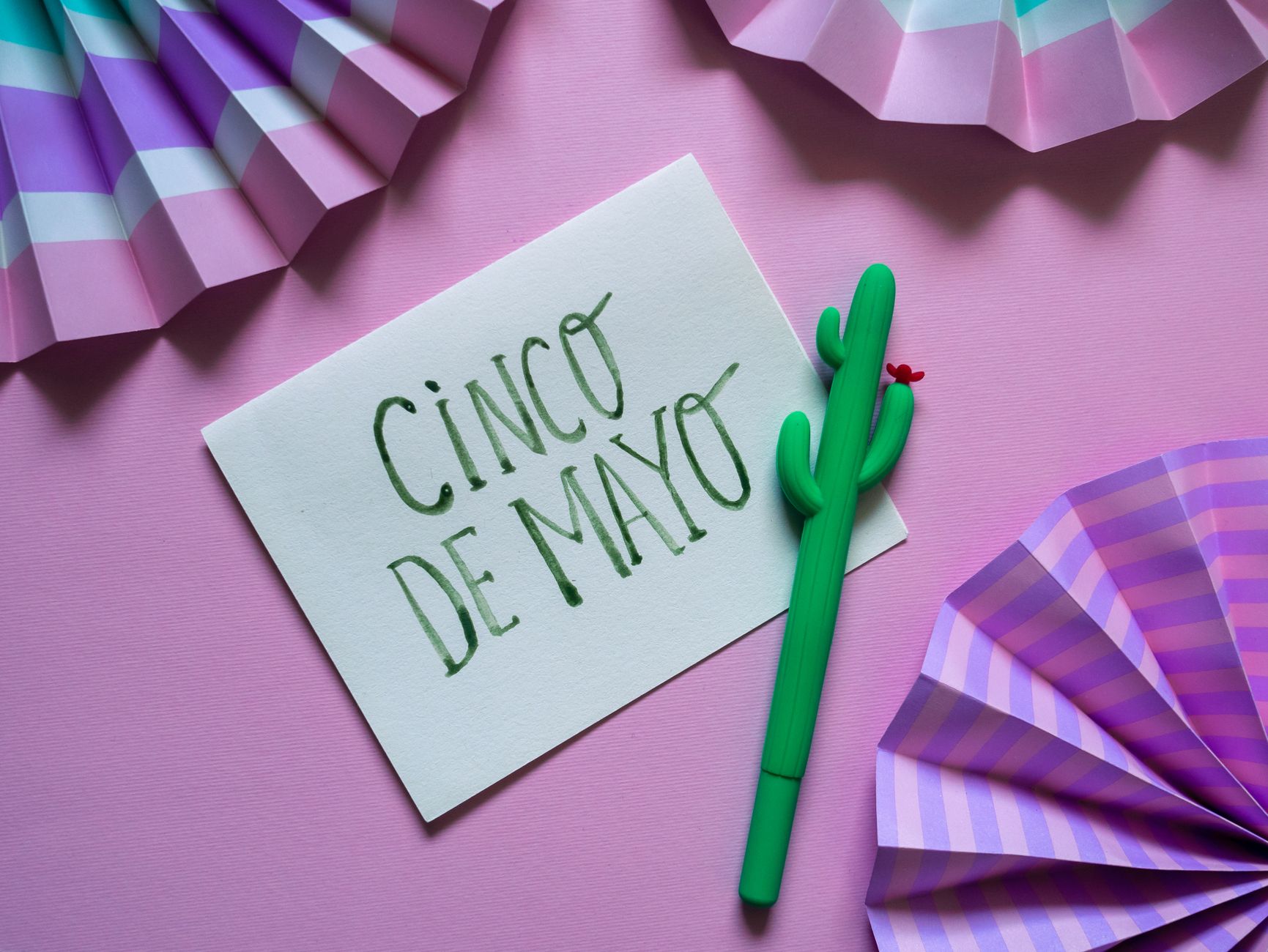
Cinco de Mayo is one week away, and if you drive Pacific Highway through Tigard in the first few days of May, you will see it building. Mexican flags in restaurant windows. Papel picado (perforated tissue paper banners) strung across storefronts. Panaderías stacking trays of conchas and tres leches. Taco trucks running extra shifts. The corridor is getting ready.
But here is the thing most Americans get wrong about Cinco de Mayo: it is not Mexican Independence Day. It is not Mexico’s biggest holiday. And the version celebrated in the United States has become something genuinely different from the day it commemorates. Worth understanding both.
📜 What Cinco de Mayo Actually Is
On May 5, 1862, a badly outnumbered Mexican army under General Ignacio Zaragoza defeated a French expeditionary force at the Battle of Puebla. France, under Napoleon III, had invaded Mexico to install a puppet emperor (Maximilian of Habsburg) and collect debts. The French army was considered the finest in the world at the time. Nobody expected Mexico to win.
They won. It was not the end of the war — France eventually took Mexico City and installed Maximilian anyway (he was later overthrown and executed) — but the victory at Puebla was a symbolic triumph of resistance against a colonial European power. It became a day of national pride, particularly in the state of Puebla.
In Mexico itself, Cinco de Mayo is a regional holiday — celebrated in Puebla with parades and reenactments, but not a major national event. Mexican Independence Day is September 16 (commemorating the 1810 Grito de Dolores), which is the big one.
In the United States, Cinco de Mayo evolved into something larger — a celebration of Mexican-American culture, heritage, and community. It took off in the 1960s and 1970s as Chicano activists adopted the Battle of Puebla as a symbol of resistance and pride. Today, it is celebrated across the country with food, music, dancing, and community gatherings that honor Mexican heritage broadly, not just the 1862 battle. The American version of Cinco de Mayo is its own thing, and it is a genuine, joyful, community-driven celebration.
🎉 How Tigard’s Latino Community Celebrates
Tigard and the surrounding southwest Portland metro area are home to a significant Latino community — families with roots in Mexico, Guatemala, El Salvador, Colombia, and across Latin America. The Mexican-American community is the largest group, and Cinco de Mayo is one of the most visible cultural celebrations of the year.
What you will find along the corridor and in the community:
- Restaurant specials. The taquerías and Mexican restaurants along Pacific Highway run Cinco de Mayo menus — special plates, drink specials, and in some cases live music or DJ sets. Many stay open later than usual. The energy is festive and welcoming.
- Panadería displays. The Mexican bakeries on and near the corridor go all out for Cinco de Mayo week — special pastries, decorated tres leches cakes in red, white, and green, and pan dulce displays that are as beautiful as they are delicious.
- Mercado specials. The Latino grocery stores and mercados stock up on everything needed for a proper Cinco de Mayo gathering — fresh tortillas, dried chiles, Mexican cheeses, aguas frescas, piñatas, and party supplies.
- Portland-area festivals. The larger Portland metro typically hosts Cinco de Mayo events at Waterfront Park or other public venues, with live music, folk dancing (folklórico), food vendors, and family activities. Check local event listings for 2026 dates and locations.
- Family gatherings. For many Mexican-American families, Cinco de Mayo is a backyard party — carne asada on the grill, rice and beans, homemade salsa, a cooler full of Jarritos and Modelo, music from a speaker, kids running around, and family members coming from across the metro. These private celebrations are the heart of the holiday.
🌮 Where to Eat on the Corridor for Cinco de Mayo
We covered the full Pacific Highway food corridor recently, so we will not repeat the entire list. But for Cinco de Mayo specifically, the Mexican spots on and near 99W are where you want to be:
- Taco trucks. The trucks parked along the corridor will be at their absolute best during Cinco de Mayo week. Al pastor turning on the vertical spit, carnitas slow-cooked since morning, birria rich and red and ready for dipping. Lines may be longer than usual. It is worth the wait.
- Taquerías with dining rooms. The sit-down restaurants will often have special Cinco de Mayo plates — mole, pozole, chiles en nogada (the patriotic dish with green, white, and red representing the Mexican flag), or tamales that someone’s grandmother made from a recipe that predates statehood.
- Panaderías. Go in the morning. Get conchas, cuernos, polvorones, and a slice of tres leches. Bring some to the office. Be the hero.
Pro tip: If you plan to eat at a sit-down restaurant on Cinco de Mayo evening (Tuesday, May 5), expect it to be busy. Go early or go on the weekend before. The food is just as good on May 3 as May 5, and the tacos do not check the calendar.
🌺 Flowers in Mexican Culture
This is the part a florist knows about, and it goes deeper than most people realize. Flowers are central to Mexican cultural life — not as decoration, but as meaningful, symbolic elements of celebration, mourning, faith, and daily beauty.
Cempasúchil (marigold): The most culturally important flower in Mexico. The bright orange marigold is the flower of Día de los Muertos (Day of the Dead, November 1–2) — used to create paths from cemeteries to homes, to guide the spirits of the deceased back to their families. Marigold petals are scattered on ofrendas (altars), woven into garlands, and piled on graves. The flower’s strong scent is believed to attract the spirits. Marigolds are not just decorative in Mexican culture — they are sacred.
Dahlia: The national flower of Mexico. Dahlias are native to the highlands of Mexico and Central America and were cultivated by the Aztecs centuries before European contact. The wild species still grows in the mountains of Oaxaca and Puebla. Every dahlia in every garden in the world descends from Mexican stock. When you see a dahlia in a flower shop, you are looking at a Mexican flower.
Noche Buena (poinsettia): Native to Mexico, where it is called flor de Noche Buena (Christmas Eve flower). The Aztecs used it as a dye and a medicine. It was introduced to the United States by Joel Poinsett (the U.S. ambassador to Mexico) in 1825. Every poinsettia at Christmas is a Mexican plant.
Flowers at celebrations: Mexican weddings, quinceañeras, baptisms, first communions, and saint’s day celebrations all feature flowers prominently — church arrangements, table centerpieces, bouquets, corsages, and flower crowns. The tradition is deeply rooted and the aesthetics tend toward abundance — full, lush, colorful arrangements that fill a space with life. Roses, carnations, lilies, and gladioli are all staples of Mexican celebration floristry.
Flowers at home: Many Mexican and Mexican-American households keep fresh flowers in the home as a matter of daily life — a small vase on the kitchen table, flowers at a home altar, or a bunch from the market refreshed weekly. Flowers are not reserved for special occasions. They are part of living well.
💐 Cinco de Mayo Flower Ideas
If you are hosting a Cinco de Mayo gathering, sending flowers to someone celebrating, or just want to bring the spirit of the holiday into your home:
- Color palette: Red, white, and green (the colors of the Mexican flag) make a striking arrangement. Red roses or carnations, white stock or snapdragons, and green foliage or green chrysanthemums. Bold, patriotic, and genuinely beautiful.
- Marigolds: If you can find them (they are more of a fall flower in the Pacific Northwest), a bunch of bright orange marigolds on the table ties directly to Mexican floral tradition. Grocery stores sometimes carry them in spring.
- Bright and abundant: Mexican floral aesthetics lean toward fullness and saturated color. This is not a minimalist-arrangement culture. Go big, go bright, go generous. Hot pink, orange, yellow, red — the table should feel alive.
- Dahlias: If available (they are a late-summer flower in Oregon, so May is early), dahlias are the most culturally resonant choice. Ask your florist about availability.
- A simple bunch from the market. Honestly, a $10 bunch of bright flowers from the grocery store, put in a jar on the table next to the salsa and the tortilla chips, is perfectly in the spirit of the holiday. It does not need to be fancy. It needs to be there.
🌍 Why This Matters in Tigard
Tigard’s Latino community is not a footnote. It is a foundational part of what makes this city work — the families who run the restaurants, stock the shelves, build the houses, landscape the yards, teach in the schools, and show up every day in ways that do not always get recognized. Cinco de Mayo is one of the moments when that community is visible and celebrated publicly, and the rest of us get to participate in something joyful.
If you have a neighbor, a coworker, a friend, or a family member who is celebrating Cinco de Mayo, send flowers. Not because it is a traditional Cinco de Mayo gift (it is not, specifically), but because sending flowers to someone during their celebration says: I see you. I appreciate your culture. I am glad you are here. That message lands.
Browse our arrangements, plants, and gifts. Same-day delivery to Tigard, Beaverton, Sherwood, Tualatin, Lake Oswego, and the Portland metro. Happy Cinco de Mayo. 🇲🇽