
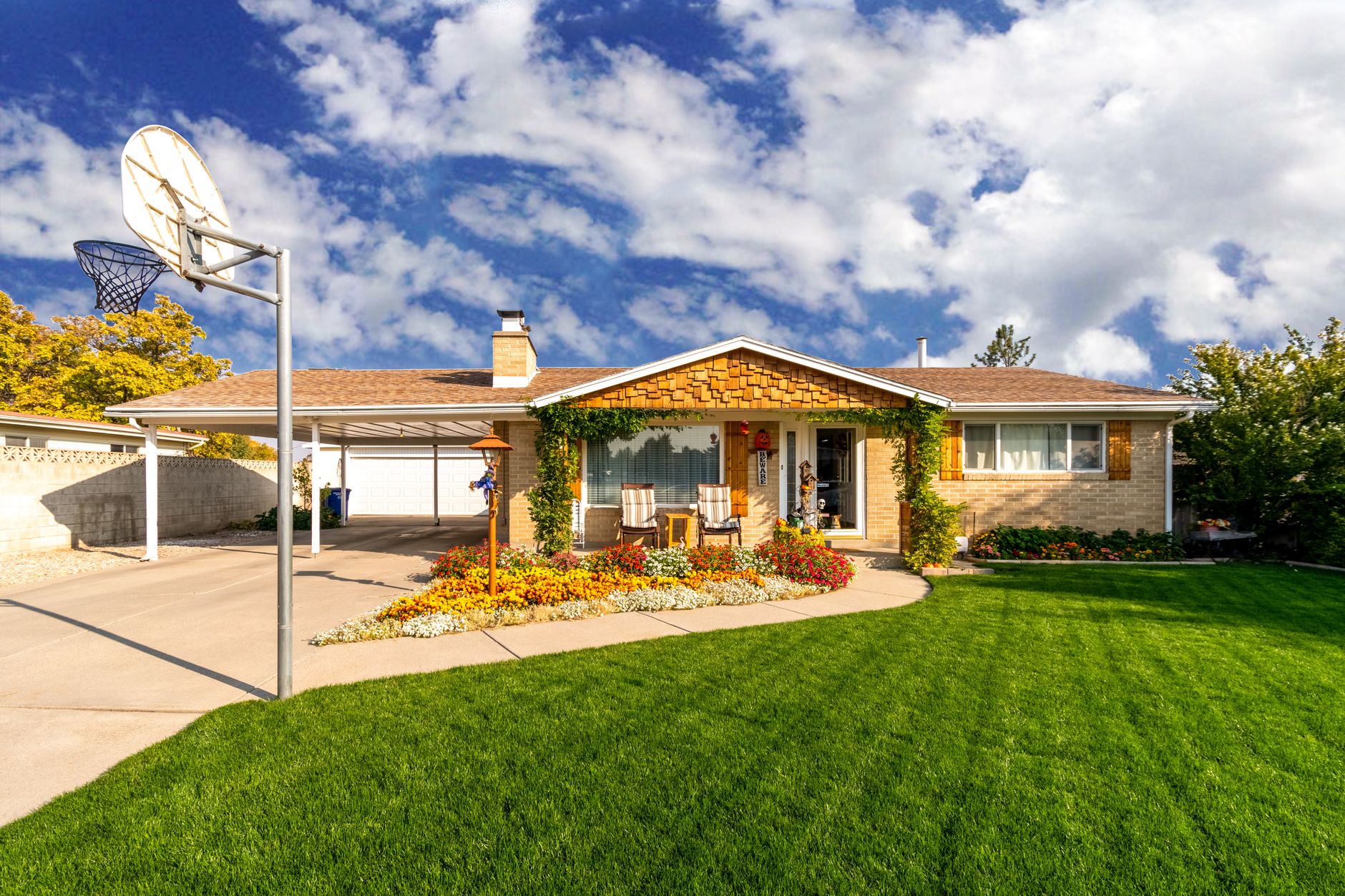
You took a walk last night. It was beautiful. The sun was out, the air smelled good, and every single yard on your street looked like it was styled for a real estate listing. Roses climbing the fence. That massive bush covered in purple blooms. The peonies nodding over the sidewalk. Your neighbor’s front beds looking like a botanical garden while yours has … bark dust. And the lavender you planted three years ago that is mostly dead.
Here is the thing: you do not have to be a gardener to live with beautiful flowers. You just need a florist. And you need to know what you are looking at so you can ask for it by name.
🌹 The Roses (They Are Everywhere and They Are Not All the Same)
Every third yard in Tigard has roses right now. But there are very different kinds doing very different things:
- Climbing roses on fences and arbors: The ones cascading over a fence or arching over a gate. Usually pink or white, with smaller blooms in massive clusters. Your neighbor planted these 5–10 years ago and they are now fully established. You cannot compete with a decade of growth.
- Hybrid tea roses by the mailbox: The classic “one perfect bloom per stem” roses in red, yellow, or peach. Very traditional Portland-metro landscaping. Gorgeous but high-maintenance — your neighbor is pruning, spraying, and feeding those constantly.
- David Austin / English garden roses: The fat, ruffled, intensely fragrant roses that look like they belong in a painting. Blush, apricot, cream, soft pink. These are what everyone is obsessing over right now.
What we carry: Garden roses are our bread and butter in late May. Juliet, Quicksand, Keira, Patience — the same David Austin varieties your neighbor is growing, except you can have them on your kitchen table in 30 minutes without owning a single rose bush. They last 5–7 days in a vase and smell exactly like walking past that yard at sunset.
🌺 The Peonies (Peak Right Now, Gone in Two Weeks)
Those fat, round, impossibly lush blooms drooping over the sidewalk in every established neighborhood? Peonies. They bloom for about three weeks in late May and early June, and then they are done for the entire year. That is why peony season feels urgent — because it is.
Your neighbor’s peony bush is probably 10–20 years old. Peonies take 3–5 years to establish and bloom heavily. You cannot plant one today and have that look this summer. Or next summer. Or the summer after.
What we carry: Oregon-grown peonies in white, blush, coral, and deep pink. Right now. This week. For the next two weeks. After that, they are gone until next May. If you want peonies in your house, this is the window. A bouquet of five peony stems in a vase on your dining table gives you everything your neighbor’s yard has — the lushness, the fragrance, the “I cannot believe how beautiful this is” factor — without the decade of gardening.
🟣 The Big Purple/Blue Bush (You See It Everywhere)
There is a massive shrub in someone’s yard — or more likely in the common area along a trail or parking strip — covered in dense purple or blue flower clusters. Bees are all over it. It is one of these:
- Rhododendron: Oregon’s signature shrub. Huge clusters of purple, pink, red, or white blooms on dark green leathery leaves. They have been blooming since April and the last ones are finishing up now.
- Lilac: Smaller clusters, intensely fragrant, usually purple or white. Lilac season is ending right now — you are seeing the last blooms of the year.
- Ceanothus (California lilac): Dense, tiny blue-purple flowers on a medium shrub. Very common along highways and in low-maintenance landscaping. Buzzing with bees.
What we carry: We cannot put a rhododendron in a vase (they wilt instantly). But for that purple-blue energy, we use delphiniums, hydrangeas, lisianthus, and stock. A purple-and-blue arrangement gives you the same mood as that bush on the corner — lush, dramatic, very Pacific Northwest.
🌼 The Spiky Things Along the Fence
Tall, dramatic spikes of color along fences and against houses:
- Foxglove: Tall (3–5 feet), with tubular bells in purple, pink, or white cascading down one side of the stem. Very cottage-garden. Very PNW. Also very toxic (do not eat the pretty bells).
- Lupine: Dense spikes of purple, blue, pink, or yellow pea-shaped flowers. You see these in wilder areas and along roadsides, but some people grow them intentionally.
- Delphiniums: Tall, elegant spikes in deep blue, purple, or white. More refined than lupine, often staked because they get top-heavy.
- Snapdragons: Shorter spikes in every color imaginable. The ones that open like little mouths when you squeeze them (you know you did this as a kid).
What we carry: Delphiniums and snapdragons are staples in our shop right now. Both add height and drama to arrangements. A tall vase with delphiniums, snaps, and some garden roses is basically your neighbor’s fence in a container.
🌿 The Stuff That Ties It All Together
Notice how the best yards do not just have flowers — they have layers. Ground cover, mid-height perennials, tall spikes, and something climbing. That layered look is what makes a garden feel full rather than spotty.
We do the same thing in arrangements: greenery as the base layer (eucalyptus, fern, salal), mid-height blooms (roses, ranunculus, stock), and tall elements (delphiniums, branches, snapdragons). When people say an arrangement looks “full” or “lush,” they are responding to layers — the same thing that makes your neighbor’s yard look incredible.
🏡 The Honest Truth About Your Neighbor’s Yard
That yard you are envious of? Here is what went into it:
- 5–20 years of established plants
- Weekend mornings spent weeding, pruning, deadheading, and mulching
- Probably $200–500/year in plants, soil amendments, and fertilizer
- A genuine hobby that brings them joy (and also frustration, and also slug battles, and also deer eating the roses)
If that is not you — if your weekends are for soccer games and brunch and not for kneeling in dirt — that is completely fine. You can still live with flowers. You just get them from us instead of from the ground.
💡 The Shortcut
Here is your move for the rest of the summer:
- Weekly flowers on the table. One bouquet, $30–$50, every week. Your kitchen looks like your neighbor’s garden all summer without a single minute of yard work.
- A porch arrangement. One big bucket by the front door with tall seasonal stems. Swap it every 7–10 days. Your front entry goes from “bark dust and a hose” to “someone who cares lives here.”
- Seasonal stems on your desk. Three stems in a bud vase. That is it. Your home office goes from sad to alive.
None of this requires a green thumb. None of it requires a yard. It just requires calling us on Monday mornings and saying “what’s good this week?”
Now that the sun is out and the city is awake, everyone is noticing everyone else’s yard. You do not have to compete with the gardeners. You just have to put flowers where people can see them. Want them to last as long as possible? Read our guide to extending vase life. Curious what all those garden flowers are doing for pollinators? Read about what bees, butterflies, and hummingbirds actually see.
Browse our arrangements — garden roses, peonies, delphiniums, and everything your neighbor is growing but you do not have to. Same-day delivery across Tigard, King City, Bull Mountain, Beaverton, and the Portland metro.