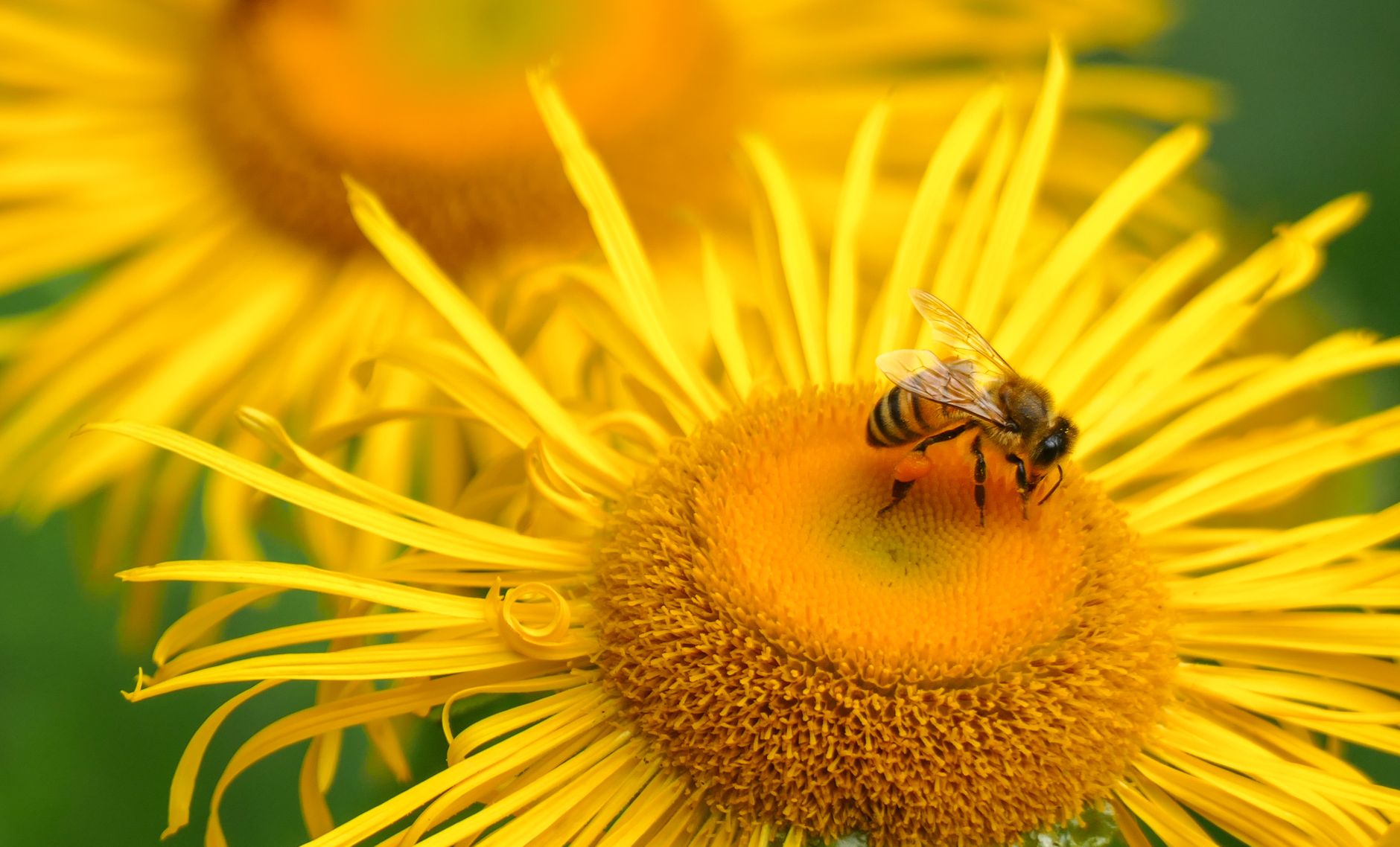
Every flower arrangement you have ever received exists because something small, fuzzy, and largely unappreciated did its job first.
We are a florist. We design arrangements, we deliver them, and we talk about flowers all day. But we do not grow the flowers. The farms that grow them — in Oregon, in California, in Colombia, in Ecuador, in the Netherlands — depend on pollinators to make those flowers exist in the first place. No pollination, no seeds. No seeds, no next generation of plants. No plants, no cut flowers. No cut flowers, no bouquet on your kitchen table.
The connection between the bee in your Tigard backyard and the roses in your vase is more direct than you think. Here is how it works, what is going wrong, and what you can do about it without leaving your neighborhood.
🌺 How Pollinators Make the Flower Industry Work
Most people understand that bees pollinate food crops — apples, almonds, blueberries, avocados. Fewer people think about the role pollinators play in the cut flower industry, but it is just as essential.
- Seed production. Many cut flower varieties are grown from seed each season — zinnias, sunflowers, cosmos, sweet peas, lisianthus, stock, snapdragons. Those seeds exist because a pollinator visited the parent plant. Commercial seed production fields depend on both managed honeybees and wild native bees.
- Breeding and hybridization. The process of creating new flower varieties — new colors, longer vase life, disease resistance, bigger blooms — requires pollination. Breeders hand-pollinate some crosses, but open pollination by insects is still fundamental to the process. The garden rose varieties and dahlia cultivars you see in arrangements today were made possible by generations of insect-assisted pollination.
- Bulb and tuber production. Tulips, lilies, dahlias, ranunculus, and other bulb flowers reproduce vegetatively (from bulbs and tubers), but they also produce seed through pollination. Seed production is how breeders develop new varieties and how genetic diversity is maintained. Without pollinators, the gene pool stagnates.
- Greenhouse and field ecology. Even on commercial flower farms, pollinator health affects the surrounding ecosystem. Farms that maintain pollinator habitat around their growing fields see better pest control (pollinators are part of the broader beneficial insect web), healthier soil ecology, and more resilient crops.
When you buy a bouquet from tigardflorist.com, you are buying the end product of a chain that starts with a pollinator visiting a flower on a farm — sometimes thousands of miles away, sometimes right here in the Willamette Valley.
🚨 What Is Threatening Pollinators
You have probably heard that pollinators are in trouble. The headlines are not exaggerated. Here is the short version:
- Habitat loss. This is the biggest driver. When farmland, meadows, and open space are converted to development, pavement, and lawn, pollinators lose the flowers they need to eat. A manicured lawn with no flowering plants is a food desert for bees.
- Pesticides. Neonicotinoid insecticides are particularly harmful to bees. They are systemic — meaning they are absorbed into the plant and present in the pollen and nectar. A bee visits a treated flower and ingests the pesticide. Oregon banned certain neonicotinoid uses for ornamental plants in 2015 after a massive bumblebee die-off in a Wilsonville parking lot (an event that made national news and changed state policy).
- Disease and parasites. Honeybee colonies face Varroa mites, fungal infections, and colony collapse disorder. Native bees face their own pathogens, often spread from managed honeybee populations.
- Climate disruption. Bloom timing and pollinator emergence are shifting out of sync. If flowers bloom two weeks earlier than they used to but the bees that pollinate them have not adjusted their schedule, both lose.
- Monoculture. Large agricultural fields of a single crop provide a brief feast followed by a long famine. Pollinators need continuous bloom — something flowering from early spring through late fall — and monoculture does not provide that.
🐝 The Pollinators in Your Tigard Yard
You do not need to travel to a nature preserve to find pollinators. They are in your yard right now — if your yard has anything for them to eat.
Bees you will see in Tigard:
- Honeybees (Apis mellifera) — the familiar ones. Not native to North America, but essential to agriculture and present everywhere. They forage in a 2–3 mile radius from their hive.
- Bumblebees (Bombus species) — large, fuzzy, and surprisingly gentle. Oregon has over 20 bumblebee species. They are more effective pollinators than honeybees for many plants because they “buzz pollinate” — vibrating their bodies to shake pollen loose from flowers that honeybees cannot access.
- Mason bees (Osmia species) — small, solitary, non-aggressive bees that nest in hollow stems and holes in wood. Incredibly efficient pollinators. You can buy mason bee houses at garden stores to encourage them.
- Sweat bees (Halictidae family) — tiny, often metallic green or blue, and almost invisible unless you look closely. They are everywhere in Tigard yards and they pollinate a huge range of plants.
- Leafcutter bees (Megachile species) — solitary bees that cut neat circles from leaves to line their nests. If you have seen perfectly round holes cut in your rose leaves, a leafcutter bee is nesting nearby. That is a good thing.
Other pollinators in the Tigard area:
- Butterflies — swallowtails, painted ladies, skippers, and occasionally monarchs. They need nectar plants and host plants for their caterpillars (different plants for different species).
- Hummingbirds — Anna’s hummingbird is a year-round resident in the Portland metro, including Tigard. They pollinate tubular flowers — fuchsia, salvia, penstemon, columbine.
- Hoverflies (syrphid flies) — they look like small bees but they are flies. Harmless, excellent pollinators, and their larvae eat aphids. Win-win-win.
🌱 The Best Pollinator Plants for Tigard Yards (Zone 8b)
If you want to support pollinators, the single most effective thing you can do is plant flowers that bloom from March through October. Pollinators need continuous food — not one big burst in June and then nothing. Here is a season-by-season guide for the Tigard area:
Early spring (March–April):
- Crocus, snowdrops, hellebores, Oregon grape (Mahonia aquifolium — the state flower), flowering currant (Ribes sanguineum)
- These are critical — bees emerging from winter need immediate food sources. Early-blooming plants save lives.
Late spring (May–June):
- Lavender, catmint (Nepeta), alliums, penstemon, California poppy, native lupine, ceanothus
- This is when most bee species are at peak activity. Lavender alone will bring more bees to your yard than almost any other single plant.
Summer (July–August):
- Echinacea (coneflower), black-eyed Susan (Rudbeckia), sunflowers, zinnias, bee balm (Monarda), cosmos, oregano (let it flower), basil (let it flower)
- The herbs are a sleeper hit — flowering oregano, basil, thyme, and mint are bee magnets. Just stop harvesting a few stems and let them bloom.
Fall (September–October):
- Asters, sedum (stonecrop), goldenrod, late-blooming dahlias, autumn joy sedum
- Fall food is critical for bees building winter stores. A patch of asters in October is a lifeline.
The power combo for a small Tigard yard: lavender + echinacea + asters. Three plants that cover May through October with continuous bloom. Add a flowering herb patch and you have a pollinator corridor in a 4-by-6-foot strip.
🏡 Beyond Plants: Other Ways to Help
- Stop spraying. Or at minimum, stop spraying anything that is flowering. If you must use pesticides, apply them in the evening when bees are not foraging, and never use neonicotinoids on flowering plants.
- Leave some mess. Native bees nest in bare ground, hollow stems, and dead wood. A perfectly manicured yard with no bare patches and no dead plant material is hostile to nesting bees. Leave a corner a little wild. Leave some stems standing through winter. Leave a patch of bare soil undisturbed.
- Provide water. A shallow dish with pebbles and water gives bees a safe place to drink without drowning. Change the water every few days to prevent mosquitoes.
- Install a mason bee house. Available at any garden center in the Tigard area. Mount it on a south-facing wall or fence, 3–5 feet off the ground. Mason bees will find it.
- Choose pollinator-friendly plants at the nursery. When buying plants, look for varieties that have not been treated with neonicotinoids. Ask the nursery — most local nurseries in the Portland metro (Al’s Garden & Home, Portland Nursery, Dennis’ 7 Dees) carry pollinator-safe stock and can advise you.
💐 What This Means for the Flowers We Sell
As a florist, we think about pollinators more than you might expect. The flowers in our cooler — the roses, the lilies, the sunflowers, the dahlias — all trace back to a pollinator doing its work somewhere. The wholesale flower farms we source from in Oregon and beyond depend on healthy pollinator populations for seed production, breeding, and ecosystem balance.
When you plant pollinator-friendly flowers in your Tigard yard, you are not just helping the bees in your neighborhood. You are supporting the broader web that makes the entire flower industry possible — from the seed farm to the grower to the wholesaler to the florist to the vase on your table. It is all connected.
And here is the beautiful part: the same flowers that pollinators love are often the same flowers that look incredible in a garden and stunning in an arrangement. Sunflowers, dahlias, lavender, zinnias, cosmos, echinacea — these are not obscure conservation plants. They are the flowers people already love. Helping pollinators does not mean sacrificing beauty. It means growing more of it.
🌻 Send Flowers, Grow Flowers, Save the Bees
Browse our arrangements, plants, and gifts. We deliver across Tigard, Beaverton, Sherwood, Lake Oswego, Tualatin, and the surrounding area every day. And while you are at it — plant some lavender this weekend. The bees will thank you. Your florist will too. 🐝