
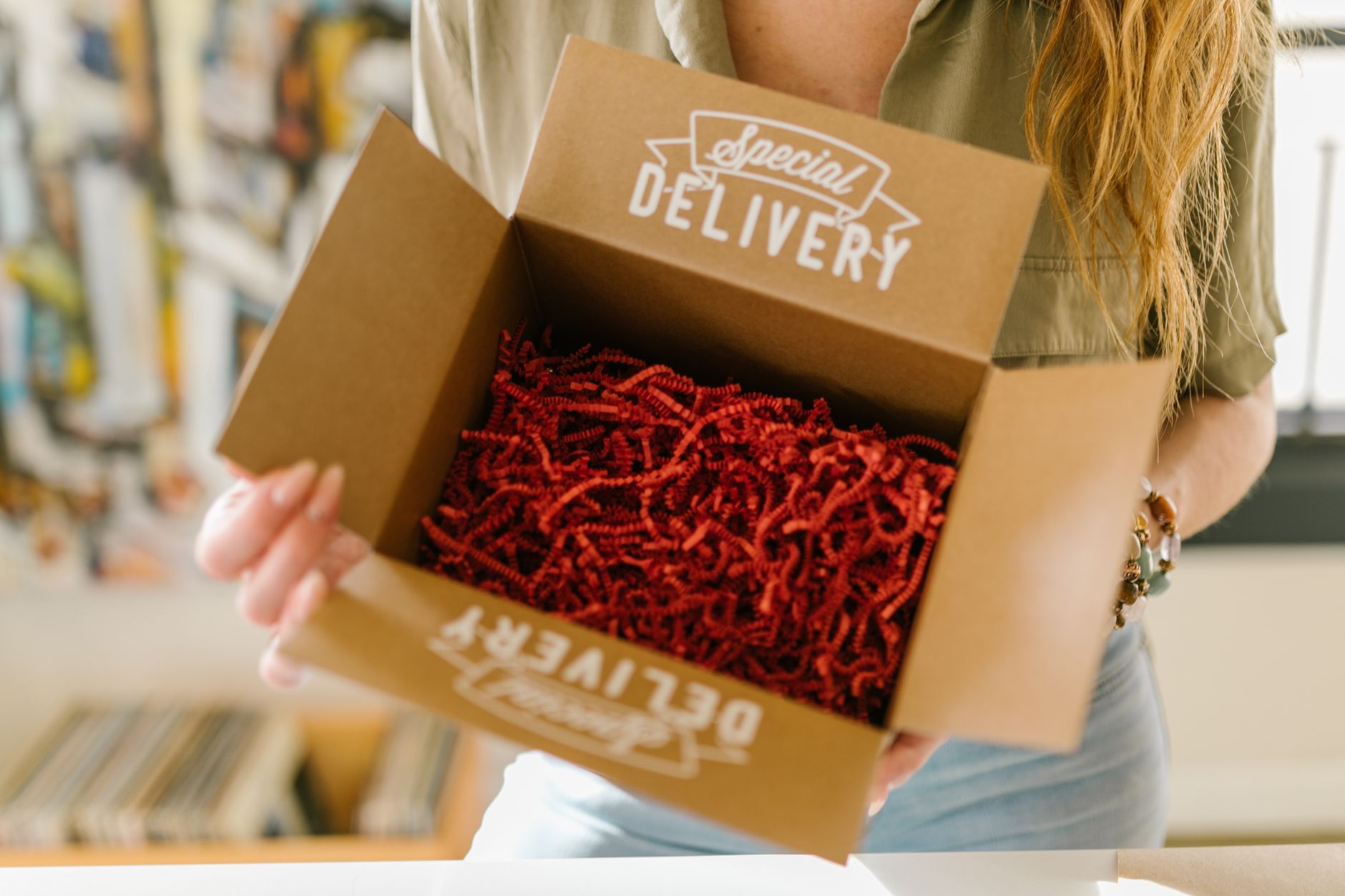
You tap a button on your phone. You type an address, pick an arrangement, write something on a card. A few hours later, someone you care about opens their front door and there are flowers. The whole thing feels seamless — almost magical — and that is by design. But between your tap and their doorbell, a surprising amount of skill, logistics, and quiet professionalism happens that most customers never see.
At tigardflorist.com, we deliver fresh, hand-designed flowers across Tigard, Beaverton, Lake Oswego, Sherwood, King City, Durham, and the surrounding Portland metro every day. We have done it thousands of times. And we thought it would be useful — and maybe a little fun — to walk you through exactly what happens on our end from the moment your order comes in to the moment the doorbell rings.
This is the full anatomy of a flower delivery. Every step, every term, every behind-the-scenes detail. Consider it a backstage pass.
📥 Step 1: The Order Comes In
Orders arrive in a few different ways, and not all of them are created equal.
Direct orders are the ones placed through our website, by phone, or in person at the shop. These are the simplest and best: you are talking directly to the people who will design and deliver your flowers. No middleman, no translation layer, no percentage skimmed off the top. When you order through tigardflorist.com, 100% of what you pay goes toward the flowers, the design, and the delivery.
Wire service orders are a different animal entirely, and this is where most customers have no idea what is happening behind the scenes. Companies like FTD, Teleflora, and 1-800-Flowers are not florists. They are order gatherers — essentially brokers who take your order and your money, keep a commission (typically 20–30% of what you paid), and then relay the order to a local florist in the recipient’s area to actually make and deliver the flowers.
That local shop is called the filling florist. The filling florist receives the order with the commission already deducted. So if you paid $75 for an arrangement through a wire service, the florist who actually designs and delivers it may receive $50–$55 to cover flowers, labor, the container, and delivery. The result is often a smaller or simpler arrangement than what you thought you were buying — not because the florist is cutting corners, but because the math does not leave room for the arrangement you saw in the glossy photo on the wire service website.
This is why florists — including us — consistently recommend ordering directly from a local shop. You get more flower for your dollar, more design attention, and direct communication with the people handling your order. We wrote about how we choose inventory for same-day delivery in a previous article — that process only works well when the full order value reaches the designer’s bench.
❄️ Step 2: The Cooler
Every professional flower shop has a walk-in cooler — a temperature-controlled room kept between 34°F and 38°F (1–3°C) where fresh-cut flowers are stored. The cooler is the heart of the operation. Everything that is not actively being designed or delivered lives in the cooler, and the temperature matters enormously.
Cut flowers are alive. They are still respiring, still consuming energy, still aging. Cold temperatures slow all of those processes. A rose that might last four days at room temperature can last eight to ten days if it has been properly cooled. The difference between a florist’s flowers and a grocery-store bucket is often not the flowers themselves — it is how they have been stored.
When fresh stock arrives from the wholesaler or grower (typically two to three times per week for a busy shop), the first thing that happens is conditioning. This is the process of preparing cut flowers for the cooler:
- Unboxing and inspection. Every stem is checked for damage, dehydration, or quality issues. Bruised petals, bent necks, and signs of botrytis (a grey mold that attacks stressed flowers) are flagged immediately.
- Recutting. Every stem is recut at a sharp angle — typically 45 degrees — using clean, sharp shears or a knife. The angled cut increases the surface area for water uptake and prevents the stem from sitting flat on the bottom of the bucket, which would block absorption.
- Stripping foliage. Any leaves that would sit below the waterline in the bucket are removed. Submerged foliage decays rapidly, breeds bacteria, and clogs the stem’s vascular system. This is the single most important thing you can do for cut-flower longevity, and it is the step home arrangers most often skip.
- Hydration. Stems go into clean buckets filled with cool water and floral preservative — a powder or liquid that contains sugar (food for the flower), an acidifier (lowers the water pH for better uptake), and a biocide (kills bacteria). The commercial preservatives florists use are significantly more effective than the home-remedy packets that come with grocery bouquets.
- Hardening off. Some flowers — particularly roses, hydrangeas, and peonies — benefit from several hours of deep hydration in the cooler before they are handled. This process is called hardening off and it allows the stems to fully hydrate, the petals to firm up, and the flower to reach its peak condition before it goes on the design bench.
Certain flowers are ethylene-sensitive — they deteriorate faster when exposed to ethylene gas, which is produced by ripening fruit, exhaust fumes, and even other flowers. Carnations, roses, lilies, and alstroemeria are particularly vulnerable. A well-managed cooler keeps ethylene sources separated and may use anti-ethylene treatments on incoming stock.
✂️ Step 3: Stem Processing
Before a flower reaches the design bench, it goes through stem processing — the hands-on preparation that turns raw floral stock into design-ready material. This is skilled, repetitive work that happens constantly in a busy shop:
- Rose processing: thorns are removed using a thorn stripper (a handheld tool with a notched blade) or a knife. Guard petals — the outermost, often bruised or discolored petals that protect the bloom during shipping — are carefully peeled away. The stem is recut and the rose goes back into preservative solution.
- Lily processing: stamens are removed to prevent pollen from staining petals, clothing, or furniture. This is done by hand, gently pulling or snipping the anthers (the pollen-bearing tips) before they open. If you have ever gotten orange lily pollen on a white shirt, you understand why florists do this.
- Woody stems (hydrangea, flowering branches, lilac) are split or crushed at the base to increase water absorption. Some florists use a technique called cross-cutting — making an X-shaped slit in the bottom inch of the stem.
- Hollow stems (amaryllis, delphiniums, some dahlias) can be filled with water and plugged with a small piece of cotton to help the stem hydrate from the inside.
- Foliage prep: greenery like eucalyptus, salal, ruscus, and leather leaf fern is stripped, sorted by size, and stored in its own buckets. Foliage is the structural backbone of most arrangements and a well-stocked greenery cooler is what separates a professional shop from an amateur one.
🎨 Step 4: The Design Bench
This is where the artistry happens. A floral designer takes the order specifications — arrangement style, color palette, size, occasion, any special requests — and builds the arrangement from scratch. Here is what that process looks like:
Choosing the vessel. The container matters more than most customers realize. Options include ceramic or glass vases, baskets with liners, bud vases (small single-stem or few-stem vases), and specialty containers for sympathy work. The vessel is selected based on the arrangement style and the design proportions.
Mechanics. Before a single flower goes in, the designer sets up the mechanics — the internal structure that holds everything in place:
- Floral foam (often called by the brand name Oasis) is a dense, water-absorbing foam block that stems are inserted into. It holds stems at any angle and keeps them hydrated. Foam has been the industry standard for decades, though it is increasingly controversial due to environmental concerns — it is a petroleum-based product that does not biodegrade. Many shops are reducing or eliminating foam use.
- Tape grids: strips of waterproof floral tape stretched across the mouth of a vase in a grid pattern. Stems are inserted through the grid openings, which holds them upright and spaced evenly. This is the most common foam-free technique for vase arrangements.
- Chicken wire: crumpled chicken wire (or purpose-made floral netting) placed inside a vase creates a flexible structure that holds stems at varied angles. Popular for garden-style and loose, natural designs.
- Pin frogs (also called kenzans): heavy metal discs with sharp pins that sit at the bottom of shallow vessels. Stems are impaled on the pins. Used primarily in ikebana-influenced and minimalist designs.
Building the arrangement. The designer works from structure to detail:
- Greenery first. Foliage establishes the shape, the height, and the visual boundaries. This is the skeleton.
- Focal flowers. The largest, most prominent blooms (roses, lilies, hydrangeas, peonies) are placed next, establishing the visual weight and color anchors.
- Secondary flowers. Smaller blooms (spray roses, alstroemeria, stock, snapdragons, carnations) fill in around the focals, adding depth and variety.
- Filler and texture. Waxflower, statice, baby’s breath, limonium, seeded eucalyptus, or similar stems add airiness, texture, and visual complexity.
- Final check. The designer rotates the arrangement 360 degrees (for an all-sides design) or checks the front face (for a presentation design), adjusts stem heights, fills gaps, and ensures the proportions are balanced.
The entire design process for a standard arrangement takes a skilled designer 15 to 25 minutes. Premium or large-scale pieces (sympathy sprays, wedding work, elaborate centerpieces) can take significantly longer.
Design styles you might see on an order form:
- Arranged in vase — the standard: flowers designed in a vase, ready to display
- Hand-tied bouquet — stems are spiraled and tied together, wrapped in paper or fabric, delivered without a vase (or with one on the side)
- Presentation bouquet — a long-stemmed bouquet designed to be cradled in the arm, often for celebrations, pageants, or recitals
- Nosegay / posy — a small, compact, round hand-tied bouquet, often used for bridesmaids or as a petite gift
- Garden style — loose, organic, textured, with varied stem heights and a “just picked from the garden” feel
- Cascading — designed to flow downward, with trailing elements like ivy, amaranthus, or jasmine. Most common in bridal bouquets.
- Compact / low and lush — a dense, rounded arrangement that sits low in the vessel. Ideal for dining tables and desks.
🔄 Step 5: Substitutions
This is the topic that generates more customer questions than almost anything else, so let us be completely transparent about it.
Substitutions happen. They happen in every flower shop, in every city, on a regular basis. Here is why:
- Flowers are agricultural products. They are grown in fields and greenhouses, harvested on a schedule, and shipped in a cold chain that spans continents. A late freeze in Colombia, a shipping delay at Miami customs, a grower’s crop coming in short — any of these can mean that the specific variety a designer planned to use is simply not available that day.
- Seasonal availability. Peonies are not available in December. Tulips disappear by June. Dahlias are a late-summer flower. Some stems are only available for a few weeks a year, and when the season ends, they are gone regardless of what the website photo shows.
- Holiday volume. On peak days (Mother’s Day, Valentine’s Day), demand outstrips supply across the entire industry. Wholesalers allocate limited quantities, and even shops that pre-ordered may receive less than expected.
The florist’s substitution code is an industry-wide set of principles:
- Equal or greater value. The substitute stem should be worth the same or more than the original. You never get less.
- Same color family. If the original was pink roses, the substitute will be another pink flower of similar prominence — not orange carnations.
- Same vibe. A romantic arrangement stays romantic. A bright and cheerful arrangement stays bright and cheerful. The mood and intent of the design are preserved even when specific stems change.
- Contact when appropriate. For significant changes (a different primary flower, a major color shift), a good shop will call or text the customer. For minor swaps (one variety of white rose for another, lisianthus instead of ranunculus), the designer uses professional judgment without delaying the order.
The best way to handle this as a customer: when placing an order, add a note like “designer’s choice within this color palette is fine” or “please call me before substituting the main flower.” That gives the designer clear guidance and avoids surprises on either side.
🚚 Step 6: Same-Day Logistics
Same-day delivery is the backbone of a local florist’s business, and the logistics are more complex than they appear from the outside.
Cut-off times. Most shops have a same-day order cut-off between 1:00 PM and 2:00 PM. Orders placed before the cut-off are designed and delivered that day. Orders placed after go out the next business day. On peak holidays, the cut-off may move earlier (sometimes to 11:00 AM or noon) because the shop is already at capacity.
The route sheet. Every delivery day, the shop builds a route sheet — a sequenced list of all deliveries organized by geography. In our case, that means clustering Tigard proper, then Beaverton runs, then Lake Oswego, then Sherwood, with the route optimized to minimize backtracking. A typical day might include 15 to 25 delivery stops; on Mother’s Day, that number can triple.
Delivery windows. Most florists offer morning or afternoon delivery rather than exact-hour appointments. The reason is practical: a driver running 20 stops cannot guarantee arrival at 2:15 PM at a specific address. Traffic, parking, apartment access codes, hospital lobbies, and recipient availability all introduce variability. “Afternoon delivery” typically means between noon and 5:00 PM.
Delivery confirmations. Many shops (including ours) send a confirmation to the sender when the delivery is complete. Some include a photo. This is a relatively recent practice that customers love and that holds the entire chain accountable.
🚘 Step 7: The Delivery Vehicle
Getting a dozen arrangements from the shop to a dozen doorsteps without a single one tipping over is a genuine skill. Here is how it works:
- Rubber shelf liner and grip mats on every flat surface inside the vehicle prevent vases from sliding. The textured surface creates enough friction that a vase stays put through normal turns and stops.
- Box dividers and crates. Multiple arrangements are separated by cardboard dividers or placed in plastic crates so they cannot bump into each other. Each arrangement gets its own space.
- Damp towels around the base of glass vases add weight and grip. This is an old florist trick that works better than anything expensive.
- Temperature management. In summer, the vehicle interior can exceed 100°F in minutes. Experienced drivers pre-cool the vehicle, minimize door-open time, and sequence deliveries so no arrangement sits in heat longer than necessary. In the Portland metro, summer afternoon deliveries are the most time-sensitive — the flowers need to move quickly from the cooled shop to the cooled vehicle to the recipient’s door.
- The “door knock” protocol. The driver rings or knocks, waits, and verifies the recipient (or a household member, neighbor, or front-desk person) before leaving the arrangement. If no one is home, the standard practice is to leave the arrangement in a shaded, protected spot (covered porch, side entry) with the card visible, and note the location in the delivery confirmation.
🔥 Step 8: What Peak Days Look Like
On a normal day, a flower shop operates at a comfortable rhythm: orders come in, flowers are designed, deliveries go out, the pace is steady. On Valentine’s Day and Mother’s Day, that rhythm turns into controlled chaos.
- Pre-ordering begins weeks in advance. The shop places bulk orders with wholesalers for specific stems — hundreds of extra roses for Valentine’s, cases of hydrangeas and peonies for Mother’s Day. These orders are placed based on projections from prior years, adjusted for trends.
- Extra staff. Additional designers, drivers, and phone/order handlers are brought in. A shop that normally runs three people might have eight or ten working on Mother’s Day weekend.
- The shop at 5:00 AM. On peak days, designers are at the bench before dawn. The cooler is full. Every flat surface is covered with buckets. The design area becomes an assembly line: one person processes stems, another builds arrangements, another packs them for delivery, another runs the route sheet.
- Delivery runs multiply. A normal day might be two delivery runs. Mother’s Day might be five or six, with drivers cycling back to reload between runs.
- Real-time coordination. Late orders, address changes, last-minute additions, substitution decisions — all happening simultaneously while the shop produces at maximum capacity. It is genuinely intense, and the fact that your flowers arrive looking beautiful and on time is a testament to the professionalism of every person involved.
📖 The Glossary: 25 Florist Terms You Should Know
If you have made it this far, you deserve a proper vocabulary. Here are the industry terms that florists use daily and that will make you a more informed customer:
- Arrangement: flowers designed in a container (vase, basket, or other vessel), ready to display as-is
- Hand-tied: a bouquet where stems are spiraled and bound together, designed to stand on their own when placed in water
- Nosegay / posy: a small, compact, rounded hand-tied bouquet
- Presentation bouquet: a long-stemmed bouquet designed to be cradled in the arm, typically wrapped in paper or cellophane
- Bud vase: a small, narrow vase holding one to three stems — a minimal, elegant gift
- Garden style: a loose, organic design with varied heights and textures, evoking a “just gathered” look
- Cascading: a design that flows downward, with trailing stems and foliage, most common in bridal work
- Sympathy spray: a one-sided floral piece displayed on an easel at a funeral or memorial service
- Standing spray: a large easel-mounted tribute piece, typically 4–6 feet tall
- Casket spray: an arrangement designed to rest on top of a closed casket lid
- Tribute: any floral piece created to honor someone who has passed
- Corsage: a small floral piece worn pinned to clothing, typically at formal events
- Boutonniere: a single bloom or small cluster worn on a lapel, typically at formal events
- Wristlet: a corsage designed on a bracelet, worn on the wrist
- Filling florist: the local shop that actually designs and delivers a wire-service relay order
- Order gatherer: a company (like FTD, Teleflora, 1-800-Flowers) that takes orders and relays them to local florists for a commission
- Relay order: an order transmitted from a wire service or another florist to a local shop for fulfillment
- Floral preservative / flower food: a solution of sugar, acidifier, and biocide added to vase water to extend bloom life
- Conditioning: the process of recutting, hydrating, and cooling fresh flowers upon arrival at the shop
- Hardening off: allowing freshly conditioned flowers to hydrate fully in the cooler before designing with them
- Botrytis: a grey fungal mold that attacks stressed or damaged flower petals, especially in humid or warm conditions
- Ethylene: a naturally occurring gas that accelerates flower aging; produced by fruit, exhaust, and decaying plant material
- Guard petals: the outermost petals on a rose, often bruised from shipping, removed during processing to reveal the pristine bloom beneath
- Mechanics: the internal structure (foam, tape grid, chicken wire, pin frog) that holds stems in position inside a vessel
- Oasis: the most common brand name for floral foam; often used generically to refer to any floral foam product
💐 Now You Know What Goes Into It
The next time you place an order — whether it is a Tuesday bud vase for your partner’s desk or a Mother’s Day arrangement for the woman who raised you — you will know what happens after you click “submit.” Your flowers will be pulled from a cooler held at precisely the right temperature, processed by hands that have done this thousands of times, designed by someone who trained for years to make stems look effortless in a vase, loaded into a vehicle by a driver who knows how to navigate Tigard, Beaverton, and Lake Oswego without a single arrangement tipping, and placed at a door with care.
That is what a local florist does. That is what you are paying for. And it is worth every penny.
At tigardflorist.com, we deliver across Tigard, Beaverton, Lake Oswego, Sherwood, King City, Durham, Tualatin, SW Portland, and the surrounding area — same-day when you order by early afternoon. No wire services, no call centers, no middlemen. Just a local florist who does every step described in this article, every single day.
href="/gifts-occasions" title="Gift Baskets"