
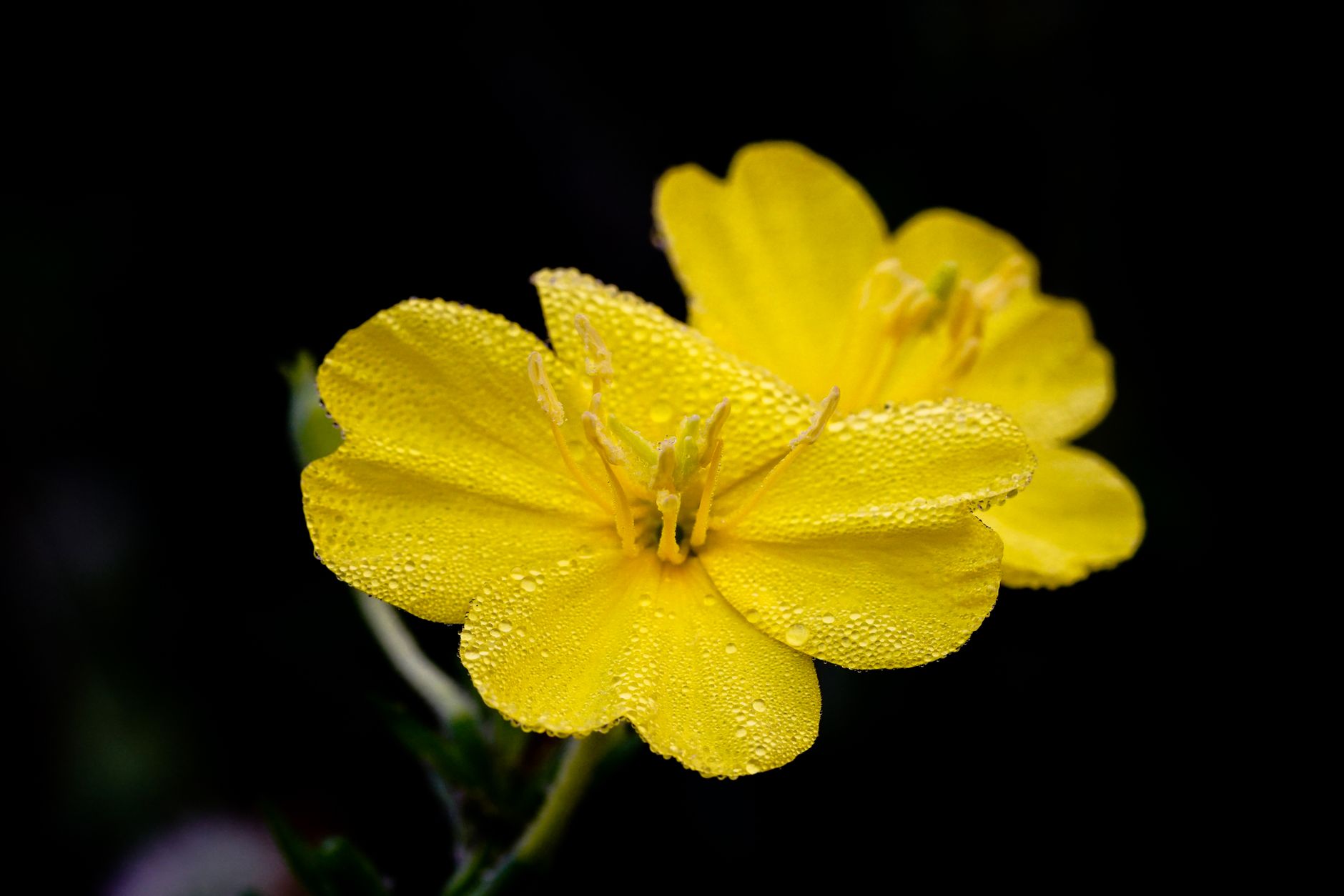
You probably have not thought about this. But your flowers are doing things at night.
Some of them are closing — folding their petals inward like they are going to sleep. Some of them are releasing fragrance they held back all day — perfuming your room in the dark. Some of them look completely different by candlelight than they do by daylight — glowing or disappearing depending on their color. And all of them are living, breathing, metabolizing organisms that behave differently after sunset than they do when the sun is up.
The bouquet on your kitchen table has a secret nightlife. Here is what is happening.
🌙 Nyctinasty: Flowers That Close at Night
The scientific term is nyctinasty — the movement of plant parts in response to the onset of darkness. In plain language: some flowers close when the sun goes down and reopen in the morning.
This is not metaphorical. It is visible, dramatic, and happening right now in arrangements and gardens across the world. The mechanism is turgor pressure — changes in water pressure within the cells at the base of each petal cause them to fold inward (close) or splay outward (open) in response to light and temperature changes.
Flowers that close at night:
- Tulips: The most dramatic closer in common floristry. Tulips visibly close in the evening and reopen each morning. If you have ever watched a tulip arrangement over a few days, you have seen them “breathing” — opening wide in afternoon warmth and closing into tight cups at night. They also respond to temperature: a cold room will keep them closed longer.
- California poppies: Close completely at night and on cloudy days. They are almost aggressively solar-powered — no sun, no show.
- Gazanias: Daisy-like flowers that shut tight after sunset. In an arrangement, they will appear closed in the morning if your house is cool and dark.
- Crocus: Opens in sun, closes in shade and at night. Early spring flowers that are deeply light-responsive.
- Morning glories: Open at dawn, close by afternoon. They do not even wait for night — they are done by midday.
- Osteospermum (African daisies): Dramatic closers. The petals fold up like an umbrella being put away.
- Dandelions: Close at night, open at dawn. You have seen this a hundred times without registering it.
Why do they close? Several theories: protecting pollen from dew and nighttime moisture, conserving energy when pollinators are not active, preventing pollen from being washed away by rain, and reducing heat loss. The exact reason varies by species, but the mechanism — turgor pressure changes in petal cells responding to light and circadian rhythms — is consistent.
🌺 Flowers That Stay Open 24/7
The good news for your evening table: most common florist flowers do NOT close at night. The flowers you are most likely to have in an arrangement stay open around the clock:
- Roses: Once open, they stay open. A rose does not close at night — it just keeps slowly opening over its vase life until the petals finally release.
- Sunflowers: The head stays facing one direction (east, if it matured in a field) and does not close.
- Lilies: Once a lily bud opens, it stays open until the flower is spent. No night closing.
- Orchids: Open continuously for weeks. No nyctinastic movement.
- Carnations: Always open. The ruffled petals are structurally incapable of closing.
- Peonies: Once open, they stay gloriously open until they shatter (drop petals).
- Lisianthus: Open continuously.
- Hydrangeas: Open continuously.
- Chrysanthemums: Open continuously.
So if you notice your arrangement looking different at night, it is probably not because flowers are closing. It is because of the next two factors: fragrance and light.
💫 Fragrance That Peaks After Dark
This is the part that will change how you think about flowers in your home. Some flowers release significantly more fragrance at night than during the day. The reason is evolutionary: these species evolved to attract nocturnal pollinators — moths, primarily — and moths navigate by scent in the dark. The flowers pump out fragrance when their pollinators are active.
For you, in your home, this means: the right flowers will perfume your room while you sleep.
Flowers with peak evening fragrance:
- Tuberose: The queen of night fragrance. Tuberose releases an intense, sweet, almost narcotic scent that peaks in the evening hours. It is one of the most powerfully fragrant flowers in existence — a single stem can perfume an entire room. In perfumery, tuberose is classified as an “evening flower” specifically because of this behavior.
- Gardenia: Rich, creamy, intoxicating. Gardenia fragrance intensifies in warm evening air. A potted gardenia near an open window on a summer night is one of the great sensory experiences available to humans.
- Jasmine: Classic evening fragrance. Jasmine releases its strongest scent after dark — this is why jasmine tea and jasmine-scented products evoke nighttime and romance.
- Stock (Matthiola): A spicy, clove-like fragrance that strengthens in the evening. Stock is common in florist arrangements and many people do not realize it is the source of the “my flowers smell amazing at bedtime” phenomenon.
- Nicotiana (flowering tobacco): Releases a sweet, jasmine-like scent at dusk. A garden flower rather than a cut flower, but worth knowing.
- Night-blooming jasmine (Cestrum nocturnum): The name says it all. Powerfully fragrant ONLY at night. Not commonly used in cut arrangements but a legendary garden plant.
- Sweet peas: Their delicate fragrance is often more noticeable in the evening when competing daytime scents (cooking, cleaning, outdoor air) have faded and the quiet of the house lets the subtle perfume reach you.
The practical takeaway: If you want an arrangement that perfumes your bedroom or living room at night, request stock, tuberose, or gardenias. Tell your florist you want “evening fragrance.” We know exactly what that means.
🕯️ How Arrangements Look by Candlelight
This is the transformation that nobody talks about but everyone notices subconsciously. Candlelight changes which flowers are visible and which disappear.
Candles emit warm-spectrum light — heavy in reds, oranges, and yellows, with almost no blue wavelength. This fundamentally alters how colors appear:
- White and cream: GLOW. White flowers by candlelight become luminous — they catch and reflect the warm light, appearing to emit their own soft radiance. This is why white flower arrangements look magical at evening dinner parties. White roses, white lisianthus, white peonies, and white hydrangeas all become transcendent by candlelight.
- Blush and soft pink: Turn warm golden-pink. The candlelight warms them further, making blush tones look richer and more romantic than they do in daylight.
- Red: Goes deep and rich. Candlelight makes red roses look darker, more saturated, more dramatic. Red and candlelight are a classic combination for a reason.
- Orange and coral: Warm beautifully. These tones are already in the candle’s spectrum, so they harmonize perfectly.
- Yellow and gold: Blend into the light. Yellow flowers by candlelight look natural and warm but do not stand out as strongly as they do in daylight.
- Blue and purple: Nearly disappear. Candlelight contains almost no blue wavelength, so blue and purple flowers lose their color in evening light. They appear dark, muddy, or nearly black. If you are building an arrangement for an evening dinner, avoid blue delphinium, purple iris, and blue hydrangea — they will not read.
- Green foliage: Goes very dark. Greenery becomes a dark frame for lighter flowers rather than a visible element in its own right.
The rule: If your flowers will be seen primarily by candlelight or evening lamp light, choose white, cream, blush, soft pink, or red. Avoid blue and dark purple. The same arrangement that looks one way at noon will look completely different at 9 PM by candles.
🌹 The Best Flowers for an Evening Table
a date night, or any evening occasion, here is the ideal combination:- White roses or garden roses — luminous by candlelight, universally elegant
- Cream lisianthus — delicate, layered, glows in warm light
- Blush peonies (in season) — the most romantic flower in existence, amplified by evening light
- Stock — provides evening fragrance AND visual texture
- Tuberose (if available) — evening fragrance powerhouse
- Ranunculus in cream or blush — layered petals catch candlelight beautifully
- Silver-dollar eucalyptus — the silvery tone reflects light better than standard green foliage
Tell us “this is for a candlelit dinner” and we will build accordingly. The palette shifts, the fragrance choices shift, and the result is an arrangement designed for how it will actually be experienced — not in a bright shop under fluorescent lights, but in your dining room at 8 PM with candles flickering.
💡 Why Evening Light Changes Everything
During the day, flowers compete with everything else in a room for your attention. The window light, the wall color, the books, the furniture — everything is visible and the flowers are one element among many.
At night, with lamps dimmed and candles lit, the room simplifies. Shadows hide clutter. Light pools on surfaces. And flowers — especially white and light-colored flowers — become the brightest, most luminous thing in the room. They draw the eye in a way they do not during the day.
This is why people often say their flowers “look different tonight” without being able to explain why. The flowers have not changed. The light has. And in the warm, narrow spectrum of evening light, light-colored flowers undergo a transformation from “pretty” to “glowing.”
🛏️ Flowers in the Bedroom at Night
A bouquet on the nightstand is an underrated luxury. But fragrance matters here more than anywhere else, because you are close to the flowers for 7–8 hours and your room is enclosed.
- Lavender: Genuinely calming. Studies show lavender scent reduces cortisol and promotes relaxation. A small vase of dried or fresh lavender near the bed is functional aromatherapy.
- Tuberose: Romantic and intense. One stem is enough. Two stems in a closed bedroom may be overwhelming — tuberose’s nighttime fragrance is POWERFUL. Use sparingly.
- Sweet peas: Gentle, subtle, and sweet. A perfect bedroom fragrance — noticeable without being overpowering.
- Gardenias: Rich and heady. Beautiful as a single bloom floating in a small bowl of water on the nightstand.
- Stock: Spicy-sweet and medium-intensity. A good middle ground between subtle and powerful.
- Roses: Lightly fragrant (garden rose varieties more so than standard). Safe, pleasant, and never overpowering.
Flowers to AVOID in the bedroom:
- Stargazer lilies: The fragrance is too intense for a closed room overnight. Many people find it headache-inducing in enclosed spaces.
- Large quantities of hyacinth: Powerfully fragrant — lovely in a living room but potentially overwhelming bedside.
- Multiple tuberose stems: One is romantic. Three is a perfume factory. Scale back for the bedroom.
🌌 The Night Shift
Your flowers are not dormant after dark. They are releasing fragrance into your sleeping house. They are responding to the temperature drop. Some are slowly closing and will reopen with tomorrow’s light. Some are glowing in the ambient light from a hallway or a streetlamp through the curtains. They are metabolizing, aging, slowly opening further — living their lives on a timeline you mostly observe in the morning when you notice they look slightly different than they did yesterday.
The next time you walk past your arrangement at midnight — on your way to get water, on your way to bed — stop for a moment. Lean in. Breathe. The flowers smell different at night. They look different at night. They are doing something you rarely get to witness because you are usually asleep.
They have a whole life after dark. Now you know. 🌙
Browse our arrangements, plants, and gifts. Same-day delivery available. Ask for “evening fragrance” or “candlelight colors” — we will build something that comes alive after sunset.