
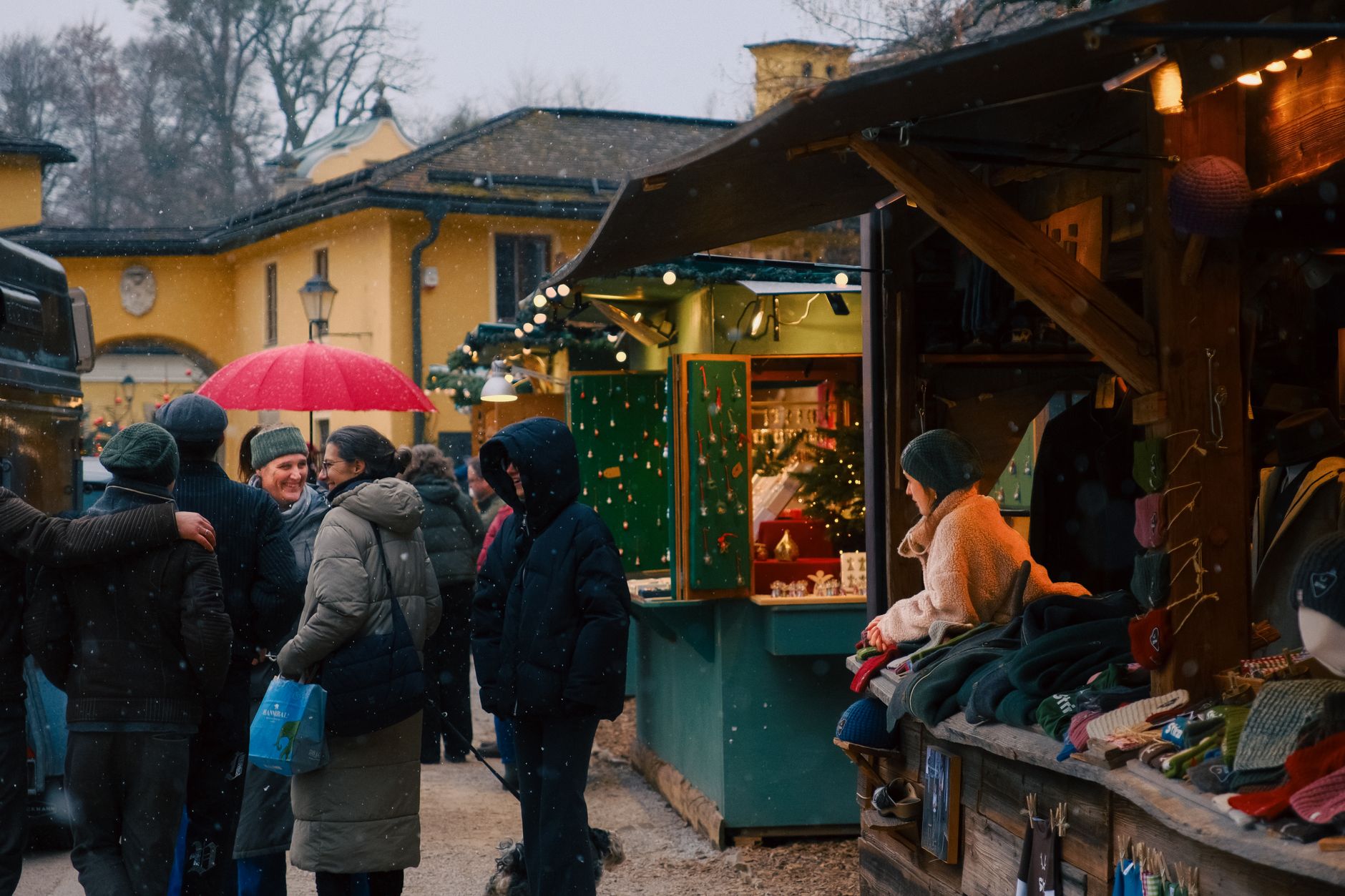
Every November, calendars fill up with holiday bazaars: school gyms, church halls, community centers and fairgrounds turn into rows of tables, and the parking lots fill up before the doors open. If you have never been to one, or you have always wondered how those vendors got there, this guide explains how bazaars work, what to do at one and how to take part.
What a Holiday Bazaar Is
A holiday bazaar is a temporary market, usually held for a day or a weekend in the weeks before the holidays, where many small sellers set up tables or booths in one place. The same idea goes by many names: craft fair, holiday market, winter market, Christmas market, boutique or maker’s market. They are often run by schools, churches, parent groups, community organizations, neighborhood associations or cities, and many raise money for the organizer’s cause. Some are small, with a dozen tables. Others fill a convention hall.
What You Will Find
- Handmade gifts: ceramics, knitwear, woodwork, candles, soaps, jewelry and cards
- Seasonal decorations, wreaths, garlands and dried-flower bundles
- Baked goods, jams, honey, candy and other packaged foods, depending on the rules where the event is held
- Plants, bulbs and small potted gifts
- Children’s activities, photos with Santa, raffles, silent auctions or a bake sale table
- Food and hot drinks to keep shoppers going
How to Make the Most of One as a Shopper
- Go early for selection, late for conversation. The best-known makers can sell out by mid-day, while the last hour is quieter and a good time to talk to sellers.
- Bring a card and some small bills. Many vendors now take cards, but not all, and a sale on a rainy day can depend on a working signal.
- Bring a bag, or two. A sturdy tote beats juggling a pile of wrapped gifts.
- Walk the whole room first. Then go back to buy. You will see what everyone has before you spend.
- Ask about custom orders. A maker you like may be glad to make something in a different color or size, and December is the time they hear it most.
- Buy a gift for someone who has everything. A handmade item with a story is often the one they remember.
- Mind the weather. If you buy a wreath, greens or a plant outdoors, keep it out of a freezing car and out of the rain on the way home. Our guide to cut flowers in winter explains why cold and dry air shorten a bouquet’s life.
How to Take Part as a Vendor
Selling at a bazaar is one of the most approachable ways to try out a craft or small business. Every event is different, so treat this as a general outline and read the organizer’s own application and rules.
- Find events early. Many applications open months ahead, often in summer or early fall for a November event, and popular ones fill up. Watch the websites and social pages of schools, churches, farmers markets and community groups, and ask makers you admire where they sell.
- Read the application. It usually asks for photos of your products, a description and a fee. Some events are juried, meaning organizers choose a mix of makers, and some take anyone who applies in time.
- Understand the cost. Fees range from a small table charge to much more at large shows, and some events ask for a share of sales or a raffle donation. Ask what the fee includes, such as a table, a chair, electricity or a spot indoors.
- Ask about rules and permits. Business licenses, sales tax, insurance and food or plant regulations vary by city, county and state, and organizers can usually tell you what they require. Do not assume.
- Plan your display. Bring a tablecloth, risers so products are at different heights, a clear sign with your name, price tags, bags or tissue for wrapping, a way to take cards, and cash for change. Outdoors, bring weights for a tent and something to hold down signs.
- Bring more stock than you think you need, in a range of prices. A few lower-priced items let casual shoppers buy something on the spot.
- Collect contact details. A simple sign-up sheet for a newsletter or a card with your website helps people find you later, long after the event.
- Write down what worked. Note what sold, what did not and what shoppers asked for. It will save you time when you apply the next year.
Other Ways to Help
If you do not want to sell, you can still take part. Most bazaars rely on volunteers to run the check-in, the bake sale and the raffle, and many accept donated baskets or gift certificates for a raffle or silent auction. A bouquet or a plant makes a nice thank-you for an organizer after the event, too.
Flowers and Greens at a Bazaar
Wreaths, dried-flower bundles and seasonal greens are some of the most popular bazaar buys, and they pair well with fresh flowers at home. If you are buying a wreath, hang it out of direct sun and away from heat to make it last. For care of the flowers and greens you take home, see our holiday flowers and greens guide and the Flower Care Guide. Looking for something for a gift list? Our Christmas gift guide for flower and plant lovers has 20 ideas.
Local Guides
For local holiday markets and shop-local days, see Christmas flowers in Eugene, which looks at the holiday market and holiday table, and Small Business Saturday in Tigard.