
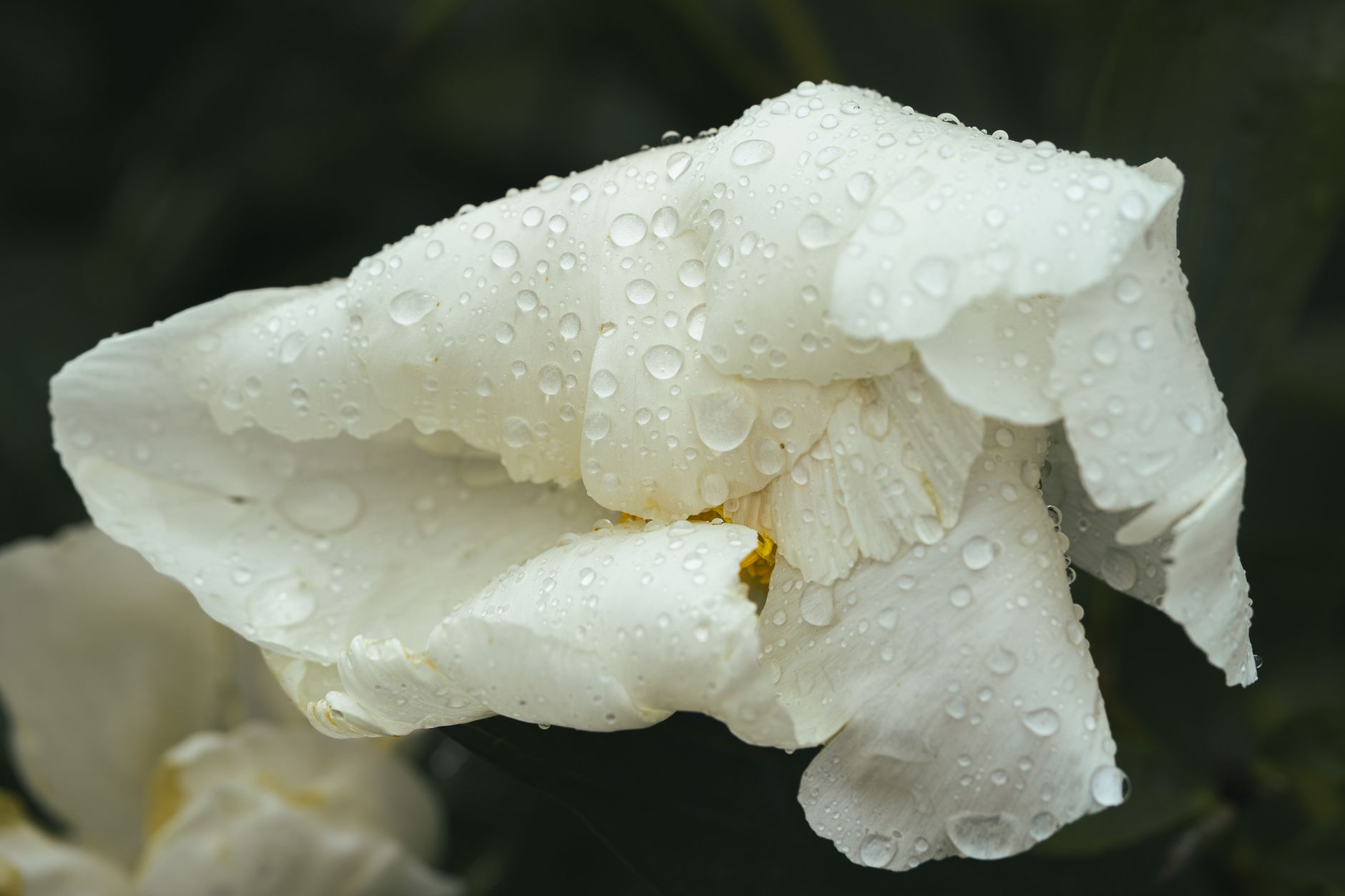
If you live around Tigard, you do not need a weather report to know that the rain has settled in for the season. What you may not have thought about is what it means for the flowers in your life, whether those are the ones you bring home in a paper sleeve, the ones a delivery driver carries up your steps, or the last dahlias in the backyard. This is a short, practical guide to flowers and rain: what the numbers say about how wet it really gets, why damp weather is hard on certain blooms, how to bring a bouquet in out of the rain and set it up, and why that first autumn rain smells so good.
🌧️ How Wet Does It Actually Get?
Here are the 1991–2020 climate normals from the National Oceanic and Atmospheric Administration’s National Centers for Environmental Information, which we read on October 27, 2026. They are for the weather station at Portland International Airport, so they describe the Portland area rather than Tigard itself, and your own yard may differ a little. For that station, the average monthly precipitation looks like this:
- July: 0.51 inches, with rain (at least 0.01 inch) on about 3.7 days.
- September: 1.52 inches, on about 6.7 days.
- October: 3.42 inches, on about 13.5 days.
- November: 5.45 inches, on about 18.3 days.
- December: 5.77 inches, on about 19.2 days.
- January: 5.03 inches, on about 18.7 days.
Across a whole year the station averages 36.92 inches on about 157 days, and November, December, and January together bring about 16.25 inches, or roughly 44 percent of the annual total. In other words, the jump from a nearly dry July to a nearly rainy-every-day December is not your imagination. The fall is when the region changes gears, and the flowers we sell, send, and grow change with it.
🍂 Why Damp Weather Is Hard on Some Flowers
Several university extension services describe the same problem, a fungal disease called botrytis blight or gray mold. Clemson University’s Home & Garden Information Center says it is favored by cool, damp weather, that it infects aging, stressed, or weak tissue (including flowers that are already finished), and that it spreads by wind and splashing water. Its typical sign is a gray, fuzzy coating on aging blossoms. Clemson also notes that flowers with thick, succulent petals, such as peonies, are particularly susceptible.
The Missouri Botanical Garden lists chrysanthemum, dahlia, lily, peony, rose, and tulip among the plants botrytis affects, and calls it the primary cause of decay in cut flowers. It describes brown spots appearing on blooms after a cool, damp period, and its basic advice for gardeners is to keep buds and flowers as dry as you can and to water early in the day so plants dry out. Oklahoma State University Extension adds that in cool, wet weather rose buds may fail to open and become covered in grayish-brown fungal growth, and that high humidity favors the disease.
What that means in practice is simple. A wet, humid week is when a tired bloom is most likely to turn to mush, and it is a good reason to take a close look at what is in your vase and in your garden beds. Pull off spent flowers and fallen petals rather than leaving them to sit, because that aging tissue is exactly where the fungus gets started.
☂️ Bringing a Bouquet in from the Rain
This part is our own florist’s advice, not research findings, so take it as common sense from people who handle flowers every day:
- Keep the wrapping on until you are inside. The sleeve is there to protect the blooms. Carry the bouquet close to your body under an umbrella or a coat, and tuck it into the car upright rather than tossing it on a seat.
- Do not leave flowers in a cold car. A bouquet that rides home, then sits in the parking lot for an hour while you run another errand is having a harder day than it needs to.
- Unwrap right away. Wet paper and plastic hold moisture against the petals. Take everything off, and let the stems and heads breathe.
- Then do the usual setup. Our guide to keeping cut flowers fresh longer covers it: a clean vase, a fresh diagonal trim of an inch or two, lukewarm water with flower food, and no leaves below the waterline. That guide also points out that too much moisture can encourage mold, so a light mist is fine but soaking the blooms is not.
- Give them a cool spot with some air. A cool room away from heaters and vents is better than a warm, steamy corner, especially on a wet day when the windows are closed up.
If you are on the receiving end of a delivery, the same applies. Bring the arrangement inside promptly, take off any outer wrapping that is damp, and check that the water level is where you want it. We deliver seven days a week, including Sundays, and a bouquet is just as welcome on a gray day as a sunny one. Honestly, it is probably more welcome.
🌼 Flowers That Suit a Wet Season
You do not need to avoid anything in the rain, but some flowers are an easy fit for a house that is shut up against the weather. Our guide to mums makes the case that chrysanthemums can outlast many other flowers, which makes them a sensible choice when you want something that keeps going through a long stretch of gray. Browse our bouquets and arrangements for fall colors, or a plant for a windowsill that will still be green in January.
And if you grow your own, the same advice from the Missouri Botanical Garden applies: water at the base of the plant in the morning rather than in the evening, and take away spent blooms before the damp sets in.
👃 Why the First Rain Smells So Good
If you have ever stepped outside after the first real rain of the season and breathed in that earthy scent, you have met petrichor. According to Wikipedia’s summary of the research, it is the earthy scent often associated with rain falling on dry soil or rock. Two Australian researchers, Isabel Joy Bear and Richard Grenfell Thomas, introduced the word in a 1964 paper in the journal Nature, using it for an odor released from rock or soil after dry conditions when they are exposed to moisture. The smell is associated with oils that build up in rocks and soil during dry spells and are released when moisture arrives. Later experiments with high-speed cameras found that raindrops hitting porous surfaces can trap air bubbles that rise and burst, releasing tiny particles that carry scent into the air.
The word itself comes from two Greek words: petra, meaning rock or stone, and ichor, the golden fluid that ran in the veins of the gods in Greek myth. A dry summer followed by the first big October rain is just the setup for it, and we think it is one of the best small pleasures of living here.
📖 Related Reading
If you love the other side of this season, read our Tigard florist’s love letter to the day the sun comes back. If a gray Friday has you wanting something for yourself, there is the Friday bouquet, one bunch turned into three small vases. And when a bouquet has finished its run, you can recycle or mulch it rather than throwing it out.
📋 The Short Version
- At Portland’s airport station, October averages about 13.5 rainy days, November about 18.3, and December about 19.2.
- Cool, damp weather favors gray mold (botrytis), which targets aging flowers and thick-petaled blooms such as peonies and is a leading cause of decay in cut flowers.
- Keep the wrapping on until you are inside, then unwrap, trim, and set the bouquet in a clean vase in a cool spot.
- The smell of the first rain is petrichor, from oils released from dry soil and rock when moisture arrives.
Sources, all read on October 27, 2026: NOAA National Centers for Environmental Information, 1991–2020 U.S. Climate Normals (Portland International Airport station); Clemson University Home & Garden Information Center, “Gray Mold”; Missouri Botanical Garden Plant Finder, “Botrytis blight”; Oklahoma State University Extension, “Botrytis Blight of Rose”; and Wikipedia, “Petrichor.” The carrying and setup tips are our own advice.