
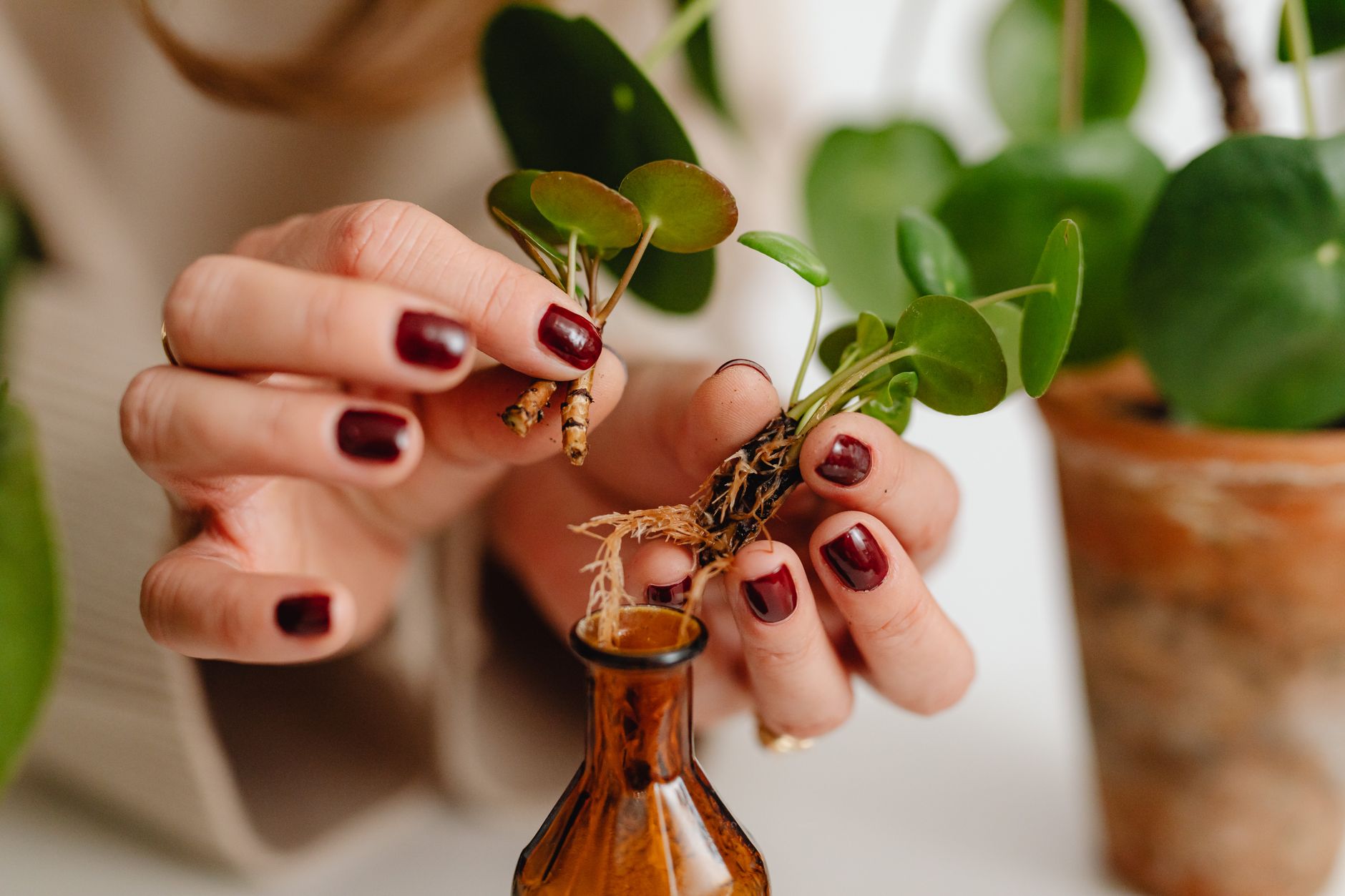
On the City of Tigard’s community calendar for Sunday, November 8, from 11:00 a.m. to noon, there is a Plant Swap at the Tigard Public Library. We love anything that gets neighbors trading cuttings and talking about plants, so this is a short, practical guide to making the most of it: what to bring, how to make cuttings in the time you have, what to leave at home, and how to keep a swap plant from bringing a pest into your house.
A note on details. The calendar listing gives the date, time, and place. The library’s description of last year’s swap, as the community site Tigard Life reprinted it, asked people to bring plants, cuttings, starts, and bulbs to share, said there would be extras for anyone who arrived empty-handed, and asked that each plant be labeled with its name and its light, soil, and water preferences. It was held for adults in the Burgess Community Room. This year’s details may differ, so check the library’s listing before you go.
🌱 What to Bring
- Healthy plants only. Penn State Extension’s advice for propagating is a good rule for swapping, too: start with plants that are free of disease, insects, and stress.
- Cuttings, divisions, or plantlets. The same guide names some easy ones. Spider plants send out plantlets that can be potted up on their own. Clump-forming plants such as snake plants and hens and chicks can be divided. African violets, snake plants, and Rex begonias can be grown from leaf cuttings.
- A label. Name, light, soil, and water, as the library asked last year. A scrap of paper or a plant tag is fine. If you do not know the name, say so and describe how the plant has done in your house; a mystery plant with honest notes is still a good gift.
- A container that travels. A small pot, a jar of water for a cutting, or a damp paper towel in a bag. Pack so nothing tips in the car.
- Seeds and bulbs, if you have them. Last year’s listing mentioned bulbs, and a swap table is a good place for them.
✂️ Taking Cuttings in the Next Two Weeks
Here is the honest part. The swap is about two weeks away, and Penn State Extension notes that some plants send out new roots shortly after propagation while others can take months. A cutting you take this week may not have roots by Sunday. You have three good options: bring an established plantlet or division that is already rooted, bring a fresh cutting in a jar of water with a label that says it is not rooted yet, or bring seeds or bulbs.
If you do take a cutting, the extension guide’s basics are simple:
- Use sharp, clean tools.
- For a branch tip, cut a piece 3 to 6 inches long with at least two nodes (the spots where leaves attach), and remove the leaves on the lower half.
- Water works for leaves, stem tips, branch tips, and stem sections.
- If you root in a medium instead, use something like perlite or vermiculite. Compost and garden soil are not good choices, because they can carry pathogens and weed seeds.
- Give the cutting bright, indirect light and keep the medium moist but not saturated.
🚫 What to Leave at Home
Plants that look unwell or have pests. A swap table is a lot of plants touching leaves. Keep an unhappy plant home.
English ivy. It is the one plant we would tell everyone to skip. Oregon State University Extension explains that English ivy grows prolifically in the Pacific Northwest, has significant negative impacts on native plants, and has been declared a noxious weed by the Oregon Department of Agriculture, which means Oregon prohibits the import, transport, propagation, or sale of it. However pretty it looks trailing from a pot, it does not belong on a swap table. If you are unsure about an outdoor plant, check the Oregon Department of Agriculture’s noxious weed list before you bring it.
🏠 Bringing Plants Home Safely
Quarantine new arrivals. Colorado State University Extension notes that infestations of insects such as scale, mealybugs, and whiteflies are almost always established from infested plants recently purchased or received as gifts. Its precaution is to put new plants in quarantine, in a separate area of the household, for at least three weeks, and then inspect them carefully. A swap plant is a gift, so the same advice applies. Keep it away from your other plants for three weeks and look closely at the leaf undersides and stems.
Check the plant against your pets. The ASPCA lists pothos (also called devil’s ivy) as toxic to dogs and cats, with signs that include mouth irritation, drooling, and vomiting. Pothos is a swap-table favorite, so it is worth knowing. If you share your home with a pet, look up any plant on the ASPCA’s list before it comes through the door. Our guide to pet-safe flowers and bouquets covers the cut-flower side of the same question.
Keep the cold off them. Early November in Tigard is cool and wet. Tender houseplants do not do well riding home in a cold trunk or an open box in the rain, so carry them in a bag or box and bring them inside quickly. That one is our own tip, not the extension’s.
🌿 If You Would Rather Buy, Gift, or Send a Plant
A swap is about sharing, and not everyone can go on a Sunday morning. If you would like a ready-to-go plant for yourself, or a plant to send to a friend who loves them, browse our plants. We deliver seven days a week, including Sundays, to Tigard, Bull Mountain, King City, Durham, and across the area.
And here is a small gift idea that costs almost nothing: a cutting in a little jar of water with a handwritten care card, for someone who helped you this year. If you are swapping herb cuttings, our guide to the overlap between herb gardens and flower arrangements has ideas for using them. For trimmings that are not worth saving as cuttings, see how to recycle or mulch what you cut. And if the swap gets you excited about your own yard, our look at why a neighbor’s garden looks better is a good next read.
📋 The Short Version
- Plant Swap, Tigard Public Library, Sunday, November 8, 11 a.m. to noon (check the library’s listing for this year’s details).
- Bring healthy plants, divisions, plantlets, seeds, or bulbs, each with a label for name, light, soil, and water.
- Do not bring English ivy.
- Quarantine what you bring home for at least three weeks, check it against your pets, and keep it out of the cold.
Sources, all read on October 26, 2026: the City of Tigard community events calendar; Tigard Life (the library’s program listing for last year’s plant swap); Penn State Extension, “Propagating Houseplants”; Oregon State University Extension, “Is English ivy harmful?”; Colorado State University Extension, “Managing Houseplant Pests”; and the ASPCA’s toxic plant entry for devil’s ivy (pothos).