
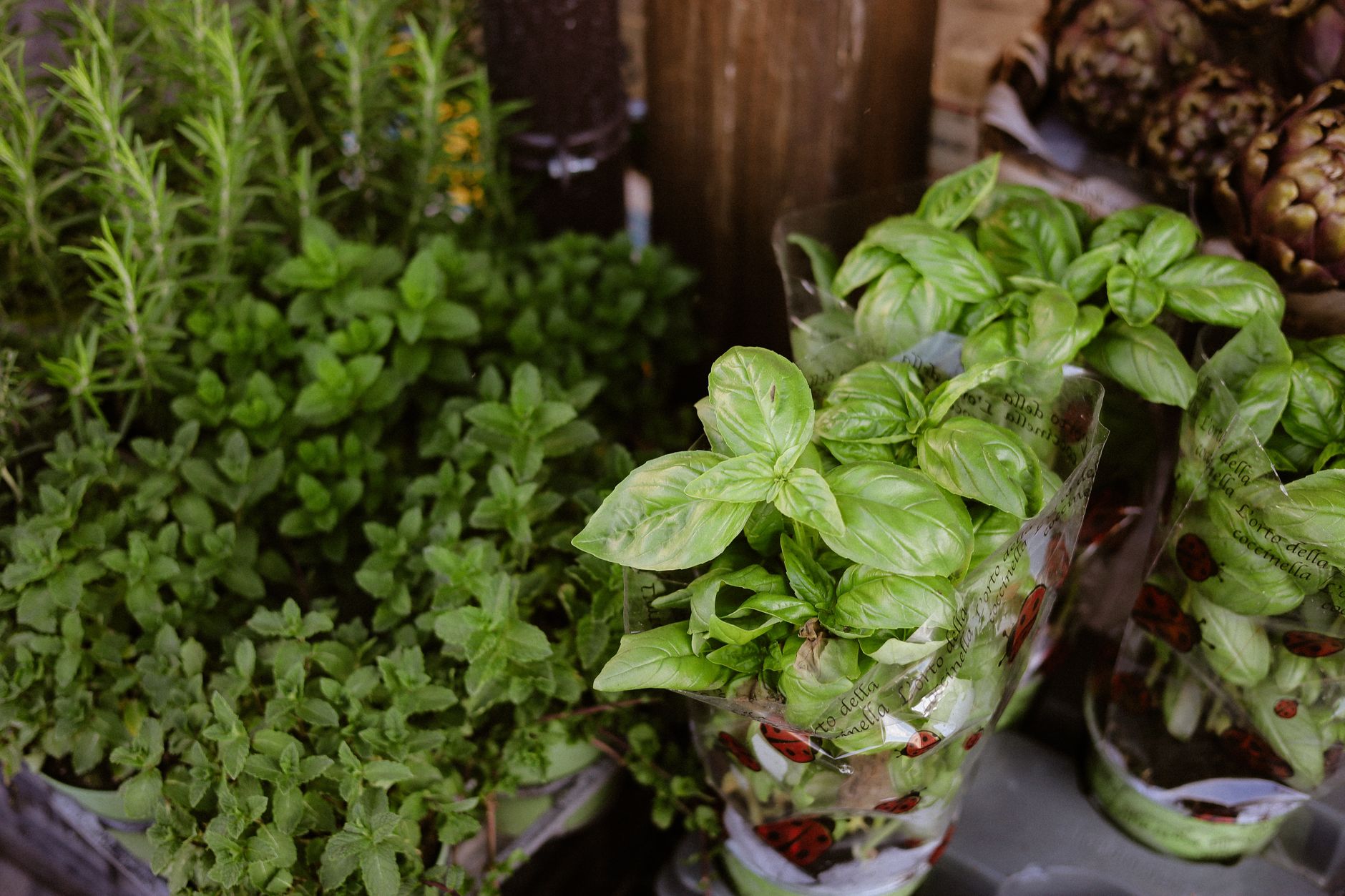
Walk outside right now. Go to your backyard, your patio, your deck — wherever you have that collection of pots or that raised bed or that overgrown corner where you planted things in April and then got busy and now everything is enormous. Look at what is out there.
You have herbs. Your basil is flowering. Your rosemary is woody and fragrant. Your mint has taken over its pot and is eyeing the one next to it. Your dill bolted a week ago and now it has those delicate yellow umbrella-shaped blooms on top. Your lavender is buzzing with bees.
Here is what a florist sees when we look at that same collection: half of that is arrangement material. And here is what a chef sees: half of your flower garden is dinner.
The line between herbs, flowers, and food is completely made up. Especially in July, when everything is growing faster than you can use it and the overlap is everywhere. This is the guide to that overlap.
🌿 Herbs That Belong in a Flower Arrangement
Next time you order flowers from us — or next time you are putting together a jar of garden picks for your own table — raid the herb garden. These work beautifully as greenery, filler, and fragrance in arrangements:
- Rosemary — woody stems, needle-like leaves, incredible fragrance. Use it as structural greenery in rustic or garden-style arrangements. It dries beautifully in place and keeps its scent for weeks. Bonus: tiny blue flowers if it is blooming.
- Mint — lush, bright green, and the stems root in water (it literally never dies in a vase). The fragrance is subtle but present. Spearmint, peppermint, chocolate mint — all work. The leaves add a fresh, herbal energy that traditional greenery cannot match.
- Dill (in bloom) — those airy yellow umbels on tall, wispy stems are stunning as filler in arrangements. They add movement, height, and an unexpected texture that makes people lean in and ask “wait, is that dill?” Yes. It is dill. In a bouquet. And it is gorgeous.
- Oregano (in bloom) — the tiny purple-pink flower clusters on oregano stems are surprisingly pretty. Use them as delicate filler the way you would use waxflower or statice. Plus, the whole arrangement smells faintly like pizza, which is not a downside.
- Basil (flowering stems) — the purple or white flower spikes that form when basil bolts are legitimately beautiful. Most gardeners pinch them off to keep the plant producing leaves. A florist says: let a few bolt, cut the flowering stems, put them in a vase. Fragrant, pretty, free.
- Sage — the silvery-green leaves are textural perfection in arrangements. Dusty, soft, velvety. And if your sage is blooming, the purple flower spikes are tall and architectural. Sage is one of the most underused arrangement greens and we wish people brought it in more often.
- Fennel (fronds and flowers) — the feathery fronds add airy, dill-like texture, and the yellow flower umbels work exactly like dill blooms. Bronze fennel is even better — dark purplish-bronze foliage that adds moody color without a single flower.
- Lavender — obviously. Dried or fresh, in bundles or mixed into arrangements. It dries in the vase without changing color and keeps its fragrance for months. This is the herb-to-flower crossover that everyone already knows, but it bears repeating: lavender is peak right now in the PNW.
- Chamomile — those tiny daisy-like flowers on wispy stems are perfect for cottage-garden or wildflower-style arrangements. They look like you walked through a meadow and gathered whatever caught your eye. Which is exactly the vibe.
🍽️ Flowers That Belong on Your Dinner Plate
Now the other direction. These are flowers — actual ornamental flowers — that are genuinely edible and genuinely delicious (or at least genuinely safe and pretty on food):
- Nasturtiums — the gateway edible flower. Peppery, slightly spicy, with a watercress-like bite. The petals are vivid orange, red, and yellow. Toss them in salads, lay them on top of deviled eggs, float them in cocktails. They taste like something, which is more than most edible flowers can say.
- Violas and pansies — mild, slightly sweet, and unbelievably photogenic. The classic “flower on a cake” flower. Freeze them in ice cubes for summer drinks. Press them onto soft cheese. They are entirely about beauty rather than flavor, and that is fine.
- Calendula — the petals are edible with a mild, slightly tangy, saffron-adjacent flavor. Pull the petals off the center disk and scatter them over rice, soup, or salads. Sometimes called “poor man’s saffron” — they add golden color to cooking water and broths.
- Borage — star-shaped, electric blue, with a cucumber-like flavor. Gorgeous in gin and tonics, on top of hummus, or frozen in ice cubes. The color is genuinely shocking — very few edible things are that blue.
- Squash blossoms — technically a vegetable flower but available right now in every garden with zucchini. Stuff them with ricotta and herbs, dip in light batter, fry until golden. The best thing to come out of any July garden, fight us on this.
- Lavender — yes, again. Culinary lavender (English varieties like Hidcote or Munstead) is used in baking, cocktails, ice cream, honey infusions, and herb-crusted proteins. A little goes a long way — too much tastes like soap. But the right amount is transcendent.
- Rose petals — fragrant varieties (not the scentless florist roses) have edible petals that work in jam, rosewater, Turkish delight, and as a gorgeous garnish on cakes and cocktails. Use unsprayed garden roses only.
- Chive blossoms — the purple pom-pom flowers on chive stems are edible with a mild onion flavor. Pull the individual florets apart and scatter them over potato salad, cream cheese, or anything that likes a little allium kick.
- Sunflower petals — the yellow ray petals are edible (slightly bitter, mildly sweet at the base). Use as a garnish. And sunflower seeds, obviously — the whole second act of the flower.
Critical safety note: only eat flowers you have grown yourself without pesticides, or flowers specifically sold as food-grade. Do not eat florist flowers — they are grown for appearance, treated with preservatives, and not food-safe. Your garden is fine. Our shop flowers are for vases, not plates.
🏡 The July Backyard Where Everything Overlaps
Here is what a well-planted Tigard backyard looks like right now, in early July, when the edible-ornamental line disappears entirely:
- Nasturtiums trailing over the edge of a raised bed, blooming orange and red, growing into the path
- Basil bolting in one corner — half of it still producing leaves for dinner, half of it flowering and gorgeous
- Lavender hedge humming with bees, equal parts ornamental and culinary
- Dill that was planted for pickles but is now 4 feet tall with yellow flower umbels swaying in the breeze
- Zucchini plants with golden blossoms that are both tomorrow’s fried appetizer and today’s backyard beauty
- Chamomile volunteering in the gravel path, tiny white daisies that could go in tea or in a jar on the windowsill
- Rosemary bushes framing the patio steps — structural, fragrant, available for both tonight’s lamb and tomorrow’s bouquet
This is not a fantasy garden. This is a normal south-metro backyard with a few herb pots and one raised bed and a couple of things that self-seeded from last year. The overlap is not something you have to design. It just happens when you grow things. Everything wants to feed you and look beautiful at the same time.
👏 The Summer Table That Does Both
Here is our suggestion for your next summer dinner outside: make a centerpiece that is half herb, half flower. Pull rosemary, mint, dill blooms, and a couple of basil stems from the garden. Add in whatever cut flowers you have — even just a couple of dahlias or sunflowers or garden roses. Put it all in a jar in the middle of the table.
Then: put edible flowers on the food. Scatter nasturtium petals across the salad. Float borage stars in the water pitcher. Put a chive blossom on the butter dish. Suddenly your weeknight dinner is a magazine spread and you spent zero dollars and three minutes.
The table tells a story: everything here came from the same 20 feet of dirt. The arrangement smells like the food. The food is decorated with things that grow next to the things in the arrangement. The boundary between kitchen and garden and vase does not exist. That is the July table at its best.
🛒 What We Can Add
If your herb garden provides the greenery and the garnish but you want proper cut flowers for the main event, that is where we come in. Right now in early July we have:
- Dahlias (early season, building toward the August peak)
- Sunflowers in multiple varieties
- Garden roses — fragrant varieties that complement herb-scented arrangements perfectly
- Zinnias starting to arrive from local growers
- Lisianthus, snapdragons, stock, and other midsummer workhorses
Tell us you are building a garden-herb arrangement and want something to anchor it. We will give you 3–5 stems of something gorgeous and structural, and you fill in the rest from your own backyard. It is the most cost-effective way to have a stunning table arrangement: $15–$20 of florist stems plus whatever you forage from your own garden equals something that looks like it cost $60.
We deliver all over Tigard, Bull Mountain, King City, Tualatin, and the surrounding neighborhoods. Same day if you order by early afternoon. Ask for the “garden mix” or just say “I want something that goes with rosemary and dill.” We know exactly what you mean.
Happy July. Go look at your herb garden. It has been trying to be a flower arrangement this whole time. Let it.