
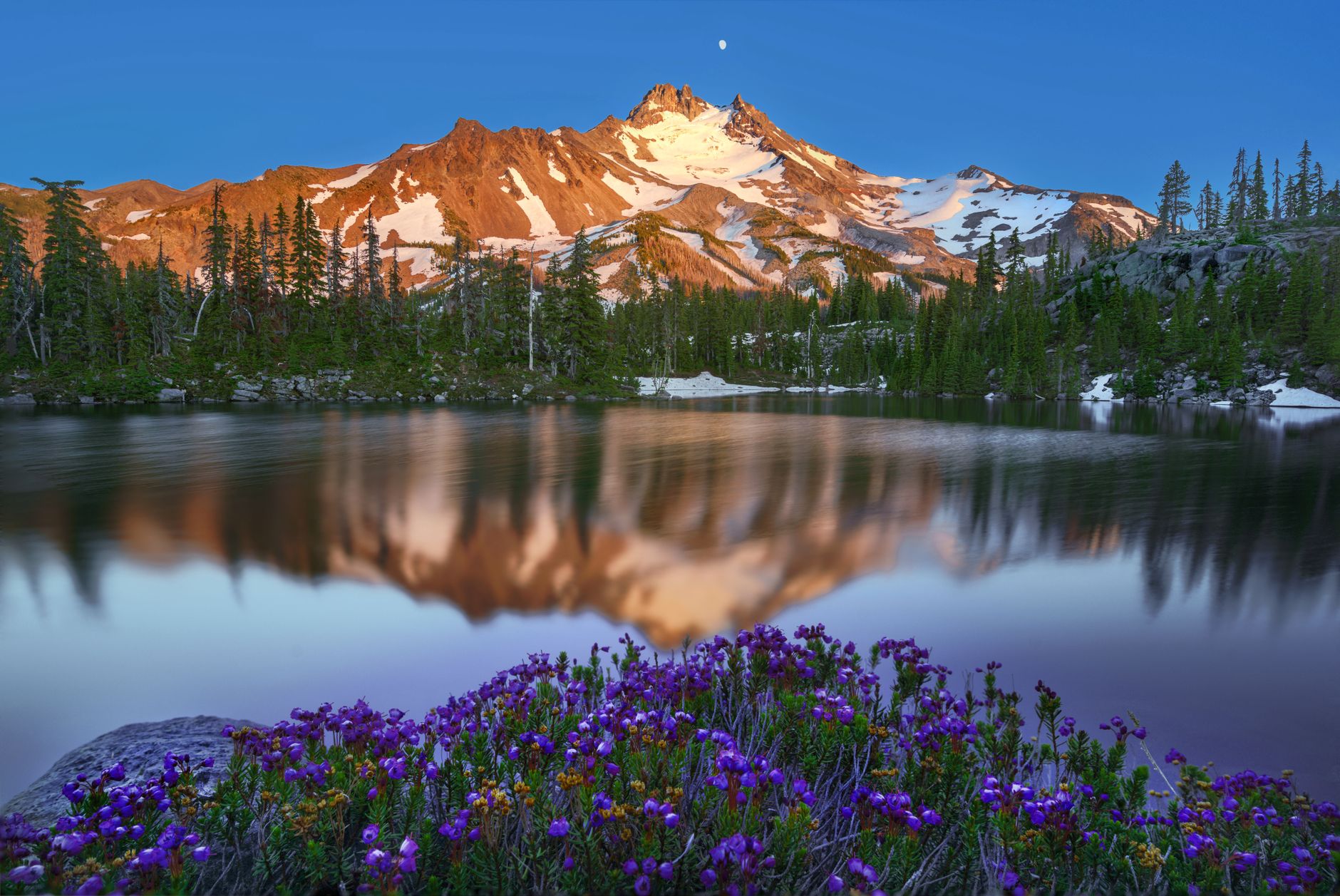
Every summer, a lot of people around Tigard start asking the same question: when are the wildflowers on Mt. Hood? Our Mt. Hood wildflowers guide covers the plants themselves. This is the practical companion, a month-by-month calendar, two hikes to start with, and a short list of things to check before you leave the house. The season is over for this year, so think of it as a plan to tuck away for next summer.
❄️ The One Rule: Snow Sets the Calendar
Mt. Hood does not bloom on a date. It blooms when the snow lets go. A big winter pushes the whole season later, and a light one pulls it earlier. Higher meadows can hold snow long after the valley is in full summer, so the calendar below is a typical pattern, not a promise. Always check recent trip reports and current conditions before you go.
🗓️ A Typical Summer, Month by Month
- June: Lower elevations and woodland trails wake up first. A few flowers can appear at higher meadows as early as June in a good year, but plenty of high trails are still snowy.
- Late June into early July: The high country starts to open. Paradise Park, on the Timberline side, is typically in bloom from late June, with the show building through July.
- July: The heart of the season. Most of the snow is gone from many popular trails, and the big meadow displays come together. The Forest Service lists wildflowers on the Elk Meadows trail from July through August.
- August: Still strong in many high meadows, with a changing cast of flowers as earlier bloomers fade and later ones take over.
- Late August into early September: The tail end. Paradise Park can still have some flowers into early September, with fewer and more scattered blooms as the season winds down.
🥾 Two Hikes to Start With
Paradise Park (Timberline side). A high-meadow hike that sits roughly between 4,800 and 6,000 feet in elevation and is known as one of the great wildflower walks near Portland. It is the “cinematic” version of Mt. Hood wildflowers, with a mountain view and open meadows. It is a real hike, so read the Forest Service and recent trip-report details before committing.
Elk Meadows Trail #645 (east side). This trail enters the Mount Hood Wilderness and, according to the Forest Service, offers views of Mt. Hood and wildflowers from July through August. It can be reached from the Polallie Trailhead or the Elk Meadows Trailhead, and several connecting trails make it easy to extend the day.
For gentler trailside color closer to home, our guide to Tigard’s trails shows what blooms along the Fanno Creek Greenway and Cook Park in summer.
🎒 Before You Go
- Check conditions first. Lingering snow can turn a flower hike into a snowfield walk, even in July.
- Look up your trailhead. Many Mt. Hood trailheads require a Northwest Forest Pass or a day-use fee, and wilderness areas have their own permit and group-size rules. The Forest Service page for your trailhead lists what applies.
- Plan the drive. It is a day trip from Tigard, usually roughly two hours each way depending on the trailhead and traffic, so start early.
- Bring layers, water, and sun protection. Mountain weather changes quickly, and the high meadows have little shade.
- Leave every flower where it is. Picking is not allowed in wilderness areas and at most popular sites, and a meadow only stays beautiful if everyone walking it leaves the blooms for the next person. Stay on the trail, and take photos.
💐 Bringing the Mountain’s Colors Home
The flowers on Mt. Hood belong to the mountain, so we never suggest taking them. What you can take home is the palette. Hood country has a recognizable set of colors: the blue-violet of lupine, the red-orange of Indian paintbrush, the creamy white of avalanche lily and beargrass, the bright yellow of monkeyflower, and the deep green of the forest around them. A florist can echo that without picking a single stem on the mountain:
- Blue and violet spikes for the lupine look, from flowers such as delphinium and larkspur when they are in season.
- Red and orange accents for the paintbrush.
- White and cream for the snowmelt flowers and the beargrass.
- A pop of yellow, the way monkeyflower brightens a wet meadow.
- Plenty of green to keep it feeling like the forest.
Want a bouquet for the table when you get back? Browse our arrangements and look for those colors, and we will deliver to Tigard and across the Portland metro. We deliver in Bull Mountain, King City, Beaverton, and throughout the area.