
Most people who live in Tigard know a few things about the city: it is close to Portland, the commute is reasonable, Cook Park is nice, and there is a Costco. What most people do not know is that Tigard has a genuinely interesting history — one that involves Indigenous people who managed prairies with fire, a Civil War veteran who gave the town his name, an era when the land was famous for onions, a railroad that changed everything, and a slow transformation from rural crossroads to one of the most livable suburbs in the Portland metro.
And at every stage of that story, flowers were part of the scene — sometimes as crops, sometimes as decoration, sometimes as the thing that showed up on the doorstep to mark a birth, a death, an apology, or a Tuesday that needed brightening. At tigardflorist.com, we are in the flower business, so we notice when flowers show up in history. They show up more often than you think.
🌾 Before Tigard Was Tigard: The Atfalati and the Prairie
Long before anyone called this place Tigard, the land was home to the Atfalati (also written Tualaty or Tuality), a band of the Kalapuya people who lived throughout the Tualatin Valley for thousands of years. The Atfalati were not passive inhabitants of a wilderness. They were active land managers who used controlled burning to maintain open prairies, encourage the growth of camas and other food plants, and keep the valley productive.
The camas meadows they tended were, in a very real sense, one of the first flower gardens in the Tualatin Valley. Camas produces a striking blue-purple bloom that can carpet entire meadows in spring — and the Atfalati depended on its starchy bulb as a dietary staple. The prairies of the Tualatin Valley in spring would have been extraordinary: miles of blue camas bloom, interspersed with wildflowers like shooting stars, buttercups, checkermallow, and native lupine.
That landscape was not untouched nature. It was cultivated, intentional, and beautiful. The flowers were not decoration — they were food, medicine, and evidence of careful stewardship. We covered some of these native species in our Pacific Northwest wildflower guide.
🏡 Wilson M. Tigard and the Donation Land Claim Era (1850s–1860s)
The city’s name comes from Wilson M. Tigard, a settler who arrived in the Tualatin Valley in the early 1850s under the Donation Land Claim Act — the federal program that gave 320 to 640 acres of Oregon Territory land to American settlers (on land that had been home to the Atfalati and other Kalapuya bands for millennia).
Wilson Tigard claimed land in what is now central Tigard, built a homestead, and became a fixture of the growing community. He served in the Civil War as a Union soldier (Oregon was far from the battlefields, but Oregonians served), returned to his land, and eventually donated the parcel where the first Tigard school and meeting hall were built. The community took his name.
In the donation-land-claim era, settlers planted orchards, kitchen gardens, and the first ornamental flowers around their homesteads. Roses, hollyhocks, lilacs, and cottage-garden staples traveled west with families in seed packets and root cuttings. The earliest Euro-American flower gardens in the Tigard area were modest, practical, and planted by people who carried beauty with them across a continent because they could not imagine a home without it.
🧅 The Onion Years (1880s–1940s)
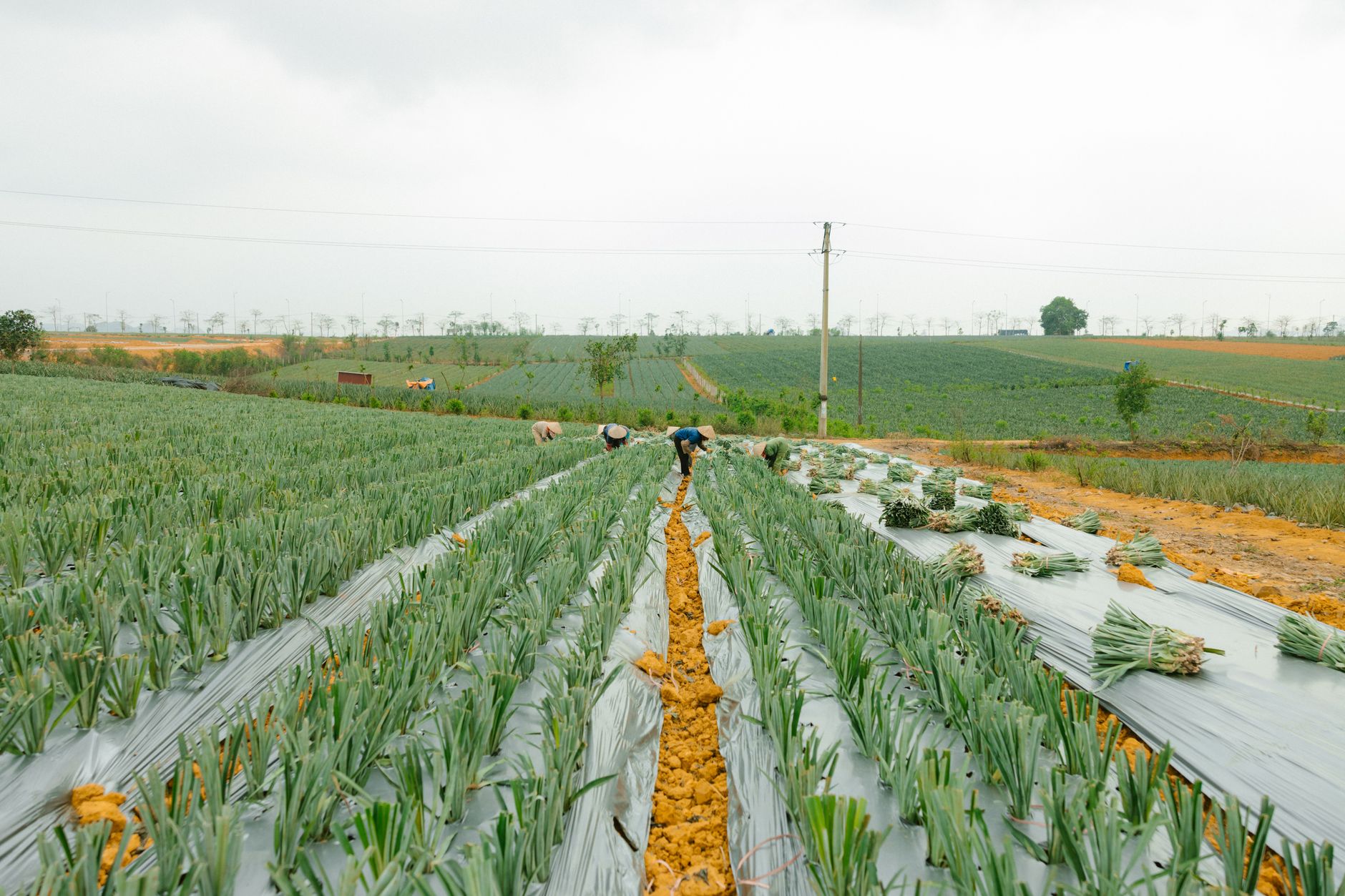
Here is the part of Tigard history that surprises most people: for decades, the area around Tigard was famous for growing onions. The rich alluvial soils of the Tualatin Valley — the same soils that once supported camas prairies — turned out to be excellent for alliums, and by the late 1800s the Tigard area was a significant onion-producing region.
The Oregon Electric Railway, which began service through Tigard in 1908, connected the farming community to Portland and made it practical to ship produce to urban markets. The Tigard area had a depot, and farmers used the rail line to move crops — including onions, berries, and other produce — to Portland buyers.
The onion connection is fun because onions are alliums, and alliums are, botanically speaking, relatives of some spectacular ornamental flowers. Giant allium (Allium giganteum), with its huge purple spherical bloom, is one of the most dramatic flowers in modern garden design. The farmers of early Tigard were growing the humble cousin of a flower that now shows up in luxury arrangements. The soil knew what it was doing all along.
🚂 The Railroad and the Transformation
The Oregon Electric Railway did more than move onions. It transformed Tigard from an isolated farming community into a place connected to Portland’s economy and culture. By the early 1900s, Tigard had a train station, a post office, a school, and the beginnings of a town center.
The railroad era brought a modest commercial district, and with it came the kind of civic beautification that small towns of the era took seriously: street trees, public plantings, church gardens, and the first real flower gardens that were purely ornamental rather than utilitarian. Women’s clubs and garden societies were a significant cultural force in early Oregon towns, and Tigard was no exception. The impulse to make a place beautiful with flowers is as old as the community itself.
🏘️ Postwar Suburbanization (1950s–1980s)
After World War II, the Portland metro area began its long suburban expansion, and Tigard was directly in its path. The farmland that had grown onions and berries for decades was gradually subdivided into residential neighborhoods. Highway 99W became a major commercial corridor. The population grew from a few hundred to thousands, and then to tens of thousands.
Tigard officially incorporated as a city in 1961, and from there the growth accelerated. Shopping centers, schools, parks, and subdivisions filled in the former agricultural land. Bull Mountain, which had been grazing land, became one of the most sought-after residential areas in the southwest metro.
With suburbanization came the explosion of residential gardening that defines the Portland-metro landscape today. The mild Pacific Northwest climate — wet winters, dry summers, minimal frost — turns out to be one of the best gardening climates in America. The new Tigard neighborhoods planted rhododendrons, azaleas, camellias, roses, hydrangeas, and Japanese maples in their front yards, and within a generation those plantings matured into the lush, layered residential landscapes that make driving through Tigard neighborhoods today feel like visiting a garden tour.
We wrote about exactly this phenomenon in our “why your neighbor’s garden looks better” guide — the answer, in many cases, is that someone planted a rhododendron in 1967 and it has had 60 years to become magnificent.
🌊 The Fanno Creek Story
One of the most important environmental stories in modern Tigard is the restoration of Fanno Creek. The creek runs through the heart of the city, and for decades it was treated the way most urban waterways were treated: channelized, polluted, and ignored. Suburban development paved over wetlands, increased runoff, and degraded the riparian habitat.
Starting in the 1970s and accelerating through the 1990s and 2000s, Tigard and the regional Tualatin Hills Parks & Recreation District invested heavily in Fanno Creek restoration — creating the Fanno Creek Greenway Trail, restoring native plantings along the banks, and building parks like Cook Park, Dirksen Nature Park, and Woodard Park that give the creek room to flood, filter, and function as a living watershed.
Today the Fanno Creek corridor is one of Tigard’s best assets — a green ribbon running through the city with walking and biking trails, native plant communities, and seasonal wildflower displays that echo (on a small scale) the camas meadows the Atfalati tended centuries ago. We wrote about the creek in detail in our Fanno Creek guide.
🏙️ Modern Tigard: More Than a Suburb
Tigard today is a city of roughly 55,000 people with a genuine identity that goes beyond “Portland suburb.” The Tigard Triangle development area is being reimagined as a walkable, mixed-use urban neighborhood. Downtown Tigard along Main Street has seen new investment, restaurants, and civic energy. The Tigard Public Library is one of the best public libraries in the metro. And the parks system — Cook Park, Dirksen, Summerlake, Fanno Creek Trail — gives the city a quality of outdoor life that many larger cities cannot match.
The Tigard Farmers Market (which we covered in our farmers market guide) is a direct descendant of the agricultural tradition that defined this land for more than a century — just with more artisanal bread and fewer onions.
And Old Town Tigard, centered on Main Street near the rail corridor, is experiencing a revival that connects the city’s past to its future. We wrote about the charm and potential of that area in our Old Town Tigard guide.
💐 How Flowers Have Tracked Every Chapter
Here is the thread that runs through all of it:
- Atfalati era: camas meadows managed with fire — the valley’s first cultivated flowers
- Settlement era: roses and hollyhocks planted around homesteads — beauty carried west in seed packets
- Agricultural era: onion fields and berry farms — alliums growing in soil that would later grow ornamental gardens
- Railroad era: civic beautification, church gardens, women’s garden clubs — flowers as community pride
- Suburban era: rhododendrons, camellias, roses, and Japanese maples in residential yards — the gardening culture that defines Tigard today
- Restoration era: native plantings along Fanno Creek — wildflowers returning to the watershed
- Modern era: local florists, farmers markets, and a community that sends flowers for every occasion — because flowers have always been part of how this place expresses care
Flowers are not a luxury. They are a thread. They run through every chapter of a community’s life, marking the moments that matter and making the ordinary more beautiful. Tigard has been doing this — in one form or another — for longer than it has had a name.
✨ The Bottom Line
Tigard is not just a convenient address between Portland and the suburbs to the south. It is a place with a real story — one that starts with camas prairies, passes through onion fields and a railroad depot, survives postwar transformation, and arrives at a modern city with good parks, a recovering creek, a reviving downtown, and a community that still believes in putting flowers on the table.
At tigardflorist.com, we are a small part of that story. We deliver flowers across Tigard, Beaverton, Lake Oswego, Southwest Portland, and the surrounding communities — same-day, hand-arranged, and rooted (so to speak) in a tradition that goes back a lot further than our website. 📜🌾💐