
The short answer is yes, in most cases. Flowers are welcomed at most nursing homes, assisted living communities and memory care units, and a bouquet is one of the best things you can send to someone who lives there. The longer answer is that every facility sets its own rules, the right flowers depend on the person, and a few small choices make the difference between a gift that brightens a room and one that gets turned away at the front desk. This guide covers the types of facilities, the five questions to ask before you order, how to address the delivery, what to choose and what to skip, how to handle dementia and shared rooms, what to send when flowers are not allowed, and how to say thank you to the staff.
It is also a good time to be thinking about it. Thanksgiving is Thursday, November 26, and Christmas is Friday, December 25. Those are the days when a lot of families cannot be there in person, and flowers that arrive on the table are a way of being there.
🏥 Not All Care Homes Are the Same
People use “nursing home” for everything, but the rules differ depending on which kind of place it is, so it helps to know which one you are dealing with.
- Nursing homes, also called skilled nursing facilities, are for people who need care that is hard to provide at home. Most have nurses and nursing aides on hand around the clock, and some nursing homes also offer short-term rehabilitation after surgery, illness or injury. Many offer memory care, often called dementia care.
- Assisted living is a housing setting for older adults who want or need help with daily activities, such as medication and personal care, but who do not need the medical care of a nursing home. It is often described as a “social model” of care, in contrast to the medical model of a skilled nursing facility. In the United States, assisted living is regulated by the states, not the federal government, so what the term means, and what the rules are, varies from state to state and from provider to provider.
- Memory care is a unit or community for people living with dementia. Some nursing homes offer it.
- Independent living communities are the most like an apartment building, and flowers are usually treated like they would be anywhere else.
Because of that variety, there is no single rule. A bouquet that is perfect for an assisted living apartment may not be allowed in a skilled nursing unit, and a plant that is welcome in one memory care community may be unwelcome in another.
🧪 Why Some Places Have Rules
If a facility asks you to check before you send flowers, it is not being difficult. It is balancing two things. One is making the place feel like a home. The other is protecting people who are more vulnerable than most. Infection-prevention guidance for U.S. nursing homes, published in October 2025 by the Society for Healthcare Epidemiology of America and partner medical societies, specifically addresses that challenge: keeping a home-like space while sustaining the necessary infection-control measures.
The common reasons, as we understand them as florists, are these:
- Infection control. Water in a vase and soil in a plant can harbor bacteria and mold. A resident with a weakened immune system, or a wound, may be on special precautions.
- Allergies and scents. Strong fragrance can be a problem for someone with asthma, for the roommate, or for the person who sits next door in the dining room.
- Space and safety. A tall arrangement on a crowded bedside table can be knocked over, and spilled water is a slip hazard.
- Memory care. Residents may mistake flowers for something to eat, which is why plant choice matters in dementia care. More on that below.
📞 The Five Questions to Ask Before You Order
One short phone call to the front desk or the nurses’ station can save you a refused delivery. Ask these five things:
- Are fresh flowers or plants allowed in resident rooms? Some places allow cut flowers but not potted plants, and the reverse.
- Are there restrictions on size, fragrance, containers or balloons? Many prefer low, compact arrangements, and some ask you to avoid glass vases.
- How are deliveries received? Front desk, nurses’ station, mailroom or activities office, and during which hours and on which days.
- What name and room or unit should go on the order? Residents often use a preferred name, and rooms change.
- Is there a roommate, or a common area where flowers can be enjoyed? That decides what size and scent to choose.
Some facilities will not confirm that someone lives there, for privacy reasons, so it is best to get the name and room from the resident or their family. If the stay is a short-term rehabilitation stay, ask when the person is expected to leave, so the flowers do not arrive after they have gone home.
📦 Addressing the Delivery
Good delivery information is what makes a flower order easy. Give us:
- The resident’s full name and the name they use.
- The name and address of the facility.
- The room number, unit or wing, if there is one.
- The facility’s phone number, so our driver can call from the door.
- The days and hours that deliveries are accepted.
We deliver seven days a week, including Sundays, so if the facility accepts weekend deliveries, a Sunday delivery is a lovely time, because that is when visitors are most common. Midmorning is often better than mealtimes or the afternoon rest period. If you are not sure, tell us the person and the place, and we will help you plan.
🌷 What to Choose
This is our own advice, as florists who send to care communities regularly.
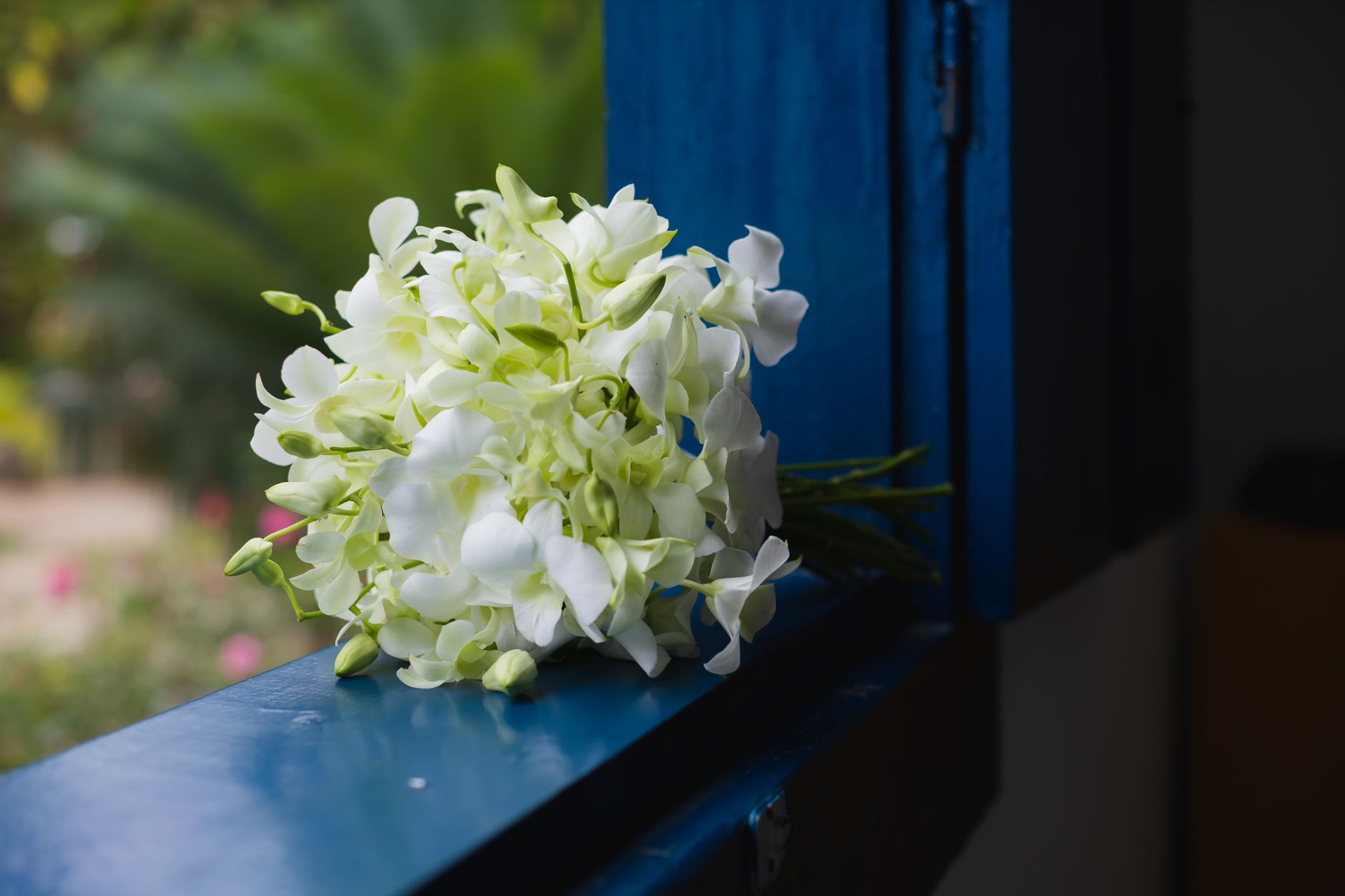
- Go compact. A low arrangement fits a bedside table, an overbed table or a windowsill. A tall one does not. Think centerpiece height, not funeral-spray height.
- Choose long-lasting flowers. Staff are busy, and water may not get changed every day. Roses, carnations, alstroemeria and chrysanthemums last a long time. Our fresh-cut flower care tips help the bouquet last, and you can pass them to the family member who visits.
- Mind the fragrance. Lilies, hyacinths, stock and freesia are beautiful and strongly scented. In a small room, or a shared one, they can be too much. Our list of the least fragrant flowers is a good place to start.
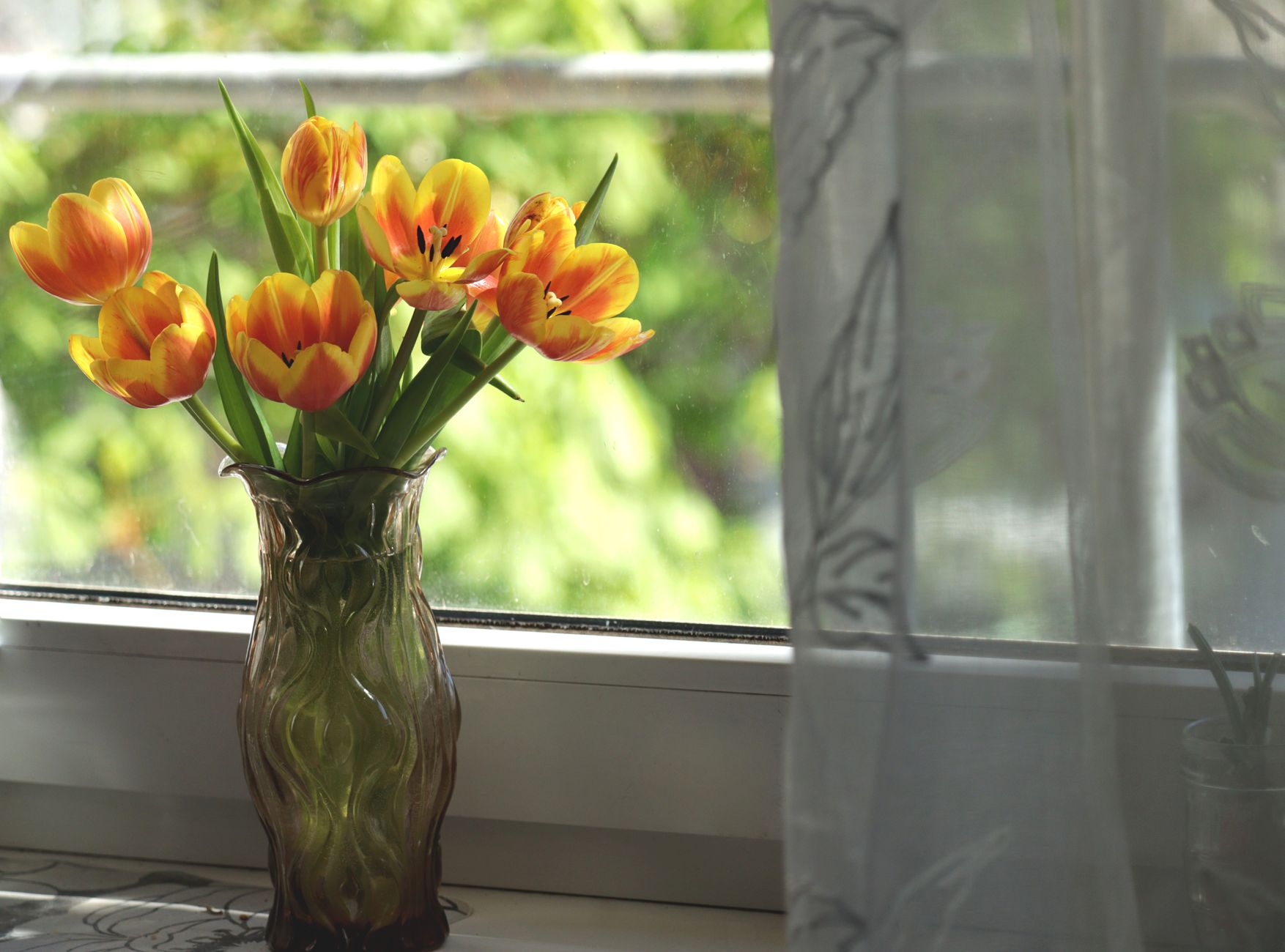
- Think about color. Bright, clear colors are easier to see and can lift a mood. Sunflowers, yellow roses and orange gerberas are cheerful, and our sunflower guide covers the varieties and how to care for them.
- Consider a plant. An orchid or a small flowering plant outlasts any bouquet, and a resident can enjoy it for weeks. Check that plants are allowed first, and see our plants and gardens page.
- Use a safe container. Ask whether glass is allowed. A sturdy, low vase that is hard to tip is a better choice than a tall, narrow one. Skip floral foam and anything that drips.
- Skip candles. Some residents use oxygen, and open flames are not permitted in many care settings.
Our designer’s choice guide explains how to give us the details and let us pick the best flowers on the day.
🧠 Memory Care and Dementia
If the person lives in a memory care unit, take extra care. Residents with dementia may mistake the colors and scents of a bouquet for something edible, and some flowers and plants are toxic if eaten. One senior-living operator publishes a list of flowers it advises avoiding for residents with dementia, including amaryllis, calla lilies, daffodils, hyacinth, hydrangea and tulips with bulbs, and a list of choices it considers safer, including roses, carnations, sunflowers, dahlias and pansies. It also asks families to tell the florist that the arrangement is for a memory care community and to ask which flowers will be used.
We would add two cautions. First, published lists do not always agree. Hydrangea is on that operator’s list of flowers to avoid, while a caregiving website lists it as a good choice for older residents. When lists disagree, the right answer is to ask the community what it prefers. Second, in memory care, simple is safest. Our approach is:
- Choose plain roses, carnations or sunflowers, and let the facility have the final word.
- Skip berries, seed pods, pebbles, glitter, wired stems, plastic picks and small ornaments. Anything small enough to be swallowed does not belong in the arrangement.
- Tell us when you order that it is for memory care, and we will keep the design plain.
- Consider a single bright bouquet for a common room, where staff can supervise, instead of the resident’s own room.
If a resident also has pets visiting, or you have pets of your own, the pet safety section in our holiday flowers and greens guide is a useful companion.
🛏️ Shared Rooms
In a shared room, the flowers are for two people, whether the roommate likes it or not. Keep the arrangement small, choose a low-fragrance bouquet and set it where it can be seen from both sides, if the staff agree. If you are not sure, a small arrangement for the common room or dining room, with a card for the resident, lets everyone enjoy it.
🚫 If Flowers Are Not Allowed
Sometimes the answer is no. A resident on special precautions, or a unit with a no-flowers policy, can turn down a vase, and that is not personal. You still have good options:
- A gift for the common area. A bouquet in the lobby, the dining room or the activities room is something every resident and visitor can enjoy, if the facility agrees.
- A card and a letter. Handwritten, in large print, with a photograph or two. Cards can be displayed, reread and kept, and nothing is more welcome.
- A gift basket. Check dietary restrictions first. Our gifts and occasions page and our flowers and gifts under $50 page have options.
- A framed photo or a photo book. A family photograph, framed in plastic, is a gift that stays.
- A visit. Nothing replaces it. Bring the flowers yourself, if the staff say it is fine, and stay a while.
🕊️ When the Resident Is Near the End of Life
If the person is in hospice or has passed away, the guidance changes. Our sympathy flower etiquette guide covers what to send, where to send it and how to handle the care facility.
👩⚕️ Thank the Staff Too
Nurses, aides, activity staff and kitchen teams do hard, often unsung work. A bouquet for the nurses’ station or the staff break room, with a card that says “thank you for taking care of my mom,” is one of the kindest orders we deliver. Check the facility’s policy on gifts for staff first, since some have rules, and keep it simple: one arrangement for the whole team is better than flowers for one person. Delivering it to a common area avoids awkwardness.
📝 What to Write on the Card
For a resident, the card matters as much as the flowers. Staff will often read it aloud, and the resident will keep it long after the bouquet is gone. Some ideas:
- “Thinking of you today. These are for your window.”
- “Happy birthday, Grandpa. I wish I could be there, so I sent the flowers instead.”
- “You taught me how to grow tomatoes. Here is something prettier to look at.”
- “I will see you on Sunday. Save me a seat.”
Use the name they use, keep the sentences short and avoid “get well soon” for someone who is not going to get better; “thinking of you” is always right.
📋 The Short Version
- Most care facilities welcome flowers, but every one sets its own rules, so call first.
- Ask whether fresh flowers and plants are allowed, any restrictions on size, scent and containers, how deliveries are received, the name and room, and whether there is a roommate.
- Choose a low, compact arrangement of long-lasting flowers with little fragrance, in a sturdy container, and skip candles.
- For memory care, keep it plain, skip anything small enough to swallow and tell the florist where it is going.
- If flowers are not allowed, send a card, a photo or a gift for the common area.
- Remember the staff, and send with a card that has a few real words.
- We deliver seven days a week, so choose the day and time that works for the facility.