Today is Election Day 2026, and we have no opinion on how you vote. We do have opinions about roses, and the most famous flower fight in American voting history happened over a pair of them. Here is a florist’s quick guide to the day: the Oregon deadline you need to know, a little history, and a few ways flowers can make a long election day (and the morning after) better for everyone, whatever the results.
⏰ The Oregon Facts for Today
- It is the November 3, 2026 general election. Every active registered voter in Oregon is mailed a ballot, and statewide races are on every ballot, including Governor and U.S. Senator. There are no statewide ballot measures this year, and party affiliation does not change what is on your ballot.
- Drop boxes close at 8 p.m. tonight. Election Day is the last day to return a ballot. The state’s last recommended day to mail one was October 27, so this late in the day a drop box is the safe route. A mailed ballot has to be postmarked by 8 p.m. on Election Day.
- County elections offices are open 7 a.m. to 8 p.m. Call yours if you have a question about your ballot. The state’s ballot drop box locator at oregonvotes.gov lists box locations and hours, and the My Vote page shows whether your ballot has been received.
- Need help? Any Oregon voter can get help registering, marking or returning a ballot. You can get that help from a friend, a family member or another trusted person, but under Oregon law not from your employer or your union.
- Results come in stages. Unofficial results start appearing shortly after 8 p.m. at results.oregonvotes.gov. They stay unofficial until they are certified, and the state’s certification date is December 10.
📬 Why Oregon Votes at the Kitchen Table
Oregon holds all of its elections by mail. Ballots arrive at home, and a state Voters’ Pamphlet is mailed to every household about three weeks before each statewide election. A 2020 study ranked Oregon the easiest state in which to vote. If you have lived here a while, it may not seem unusual that voting means a pen, a kitchen table and a short drive to a drop box, though not every state does it this way.
🌹 The War of the Roses
In the summer of 1920, the 19th Amendment, which bars denying the vote on the basis of sex, was one state short. Thirty-five state legislatures had ratified it. Tennessee would decide. When the Tennessee General Assembly convened in Nashville on August 9, supporters and opponents set up stations outside the chambers, handing out yellow roses to supporters of the amendment and red roses to its opponents, the “Antis.” The yellow rose became the symbol of the suffrage side, and the red rose of the other.
The final vote came on August 18. Harry Burn, a 24-year-old representative who had voted to table the measure twice, cast the deciding yes vote after receiving a note from his mother urging him to support it. He said he supported suffrage as a “moral right.” The amendment went into effect that day, and it enfranchised 26 million women in time for the 1920 presidential election.
🌲 Oregon’s Own Suffragist
Oregon has a place in that story too. Abigail Scott Duniway came to Oregon on the Oregon Trail in 1852, in a wagon party that lost her mother to cholera along the way. She later founded a weekly newspaper, The New Northwest, to promote women’s right to vote, toured the Pacific Northwest with Susan B. Anthony, and addressed the Oregon legislature in 1872. Oregon voters rejected suffrage at the polls repeatedly. Her persistence paid off in 1912, when Oregon became the seventh state to pass a women’s suffrage amendment. The governor asked her to write and sign the equal suffrage proclamation, and she was the first woman to register to vote in Multnomah County.
🌼 What Flowers Are Good For on Election Day
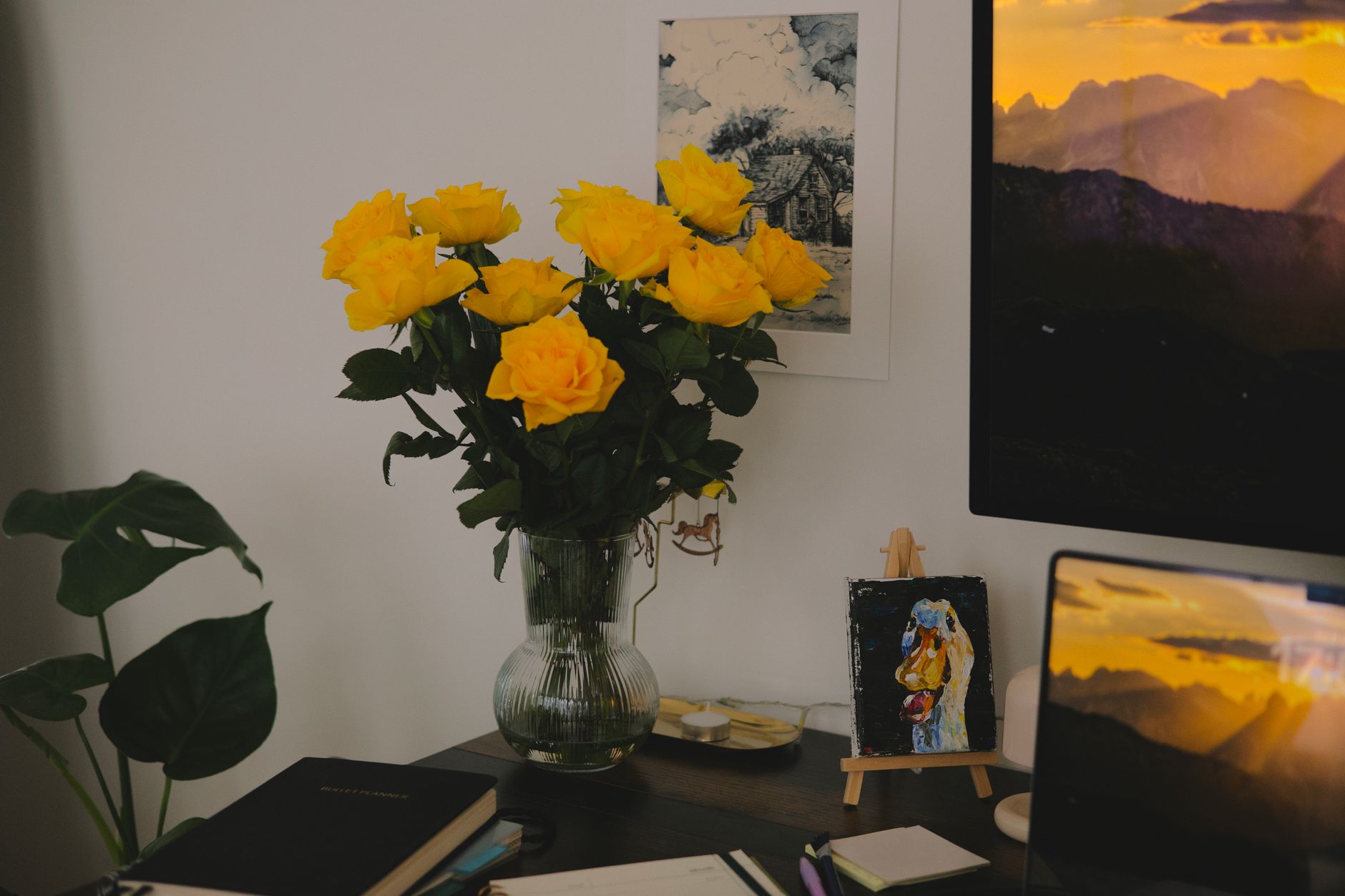
- A yellow rose for the history. If you like a quiet nod to the day, a few yellow roses on the table are a tribute to the people who fought for the ballot, not to any party or candidate. Our guide to everything about roses covers choosing and keeping them, and our flower meanings guide covers what each color traditionally says.
- A first-time voter. Someone in your family may have mailed their very first ballot this fall. A small bouquet and a card that says “you voted” is a gift with no downside. It does not say who they voted for, only that they showed up.
- A thank-you for the people who run elections. Ballots are counted and verified by county staff and volunteers. Many public offices have rules about gifts, so a handwritten thank-you card is always the safe choice, and our Tigard thank-you list has ideas for who else deserves a note. If a bouquet is allowed where you are sending it, our thank-you flowers page has options.
- A watch-party table with no sides. If you are hosting people with different politics, skip red and blue. All white, or white and green, keeps the table out of the argument. Keep arrangements low so everyone can see the screen.
- The morning after. Elections are tiring, whoever wins. Wednesday is a good day to send flowers to a friend who volunteered, worked a campaign or just stayed up too late watching returns. It is one of the few days when everyone, on every side, is equally in need of something pleasant.
🏘️ A Local Note
If you want to understand why a place like Tigard looks the way it does, our post on Tigard’s history from onion fields to livable suburb is a good read for a quiet evening while you wait for results.
📋 The Short Version
- Election Day 2026 is Tuesday, November 3. Oregon drop boxes close at 8 p.m., and mailed ballots must be postmarked by 8 p.m. today, so use a drop box.
- Unofficial results start after 8 p.m.; they are certified December 10.
- In 1920, yellow roses stood for suffrage and red roses for its opponents in Tennessee, the state that put the 19th Amendment over the top.
- Oregon’s Abigail Scott Duniway helped win the vote here in 1912.
- Flowers are good for first-time voters, thank-you notes and a table with no sides.