
Tigard already has plenty of guides to where to walk. This one is about what you are looking at once you get there. Most of us can name a rose or a tulip, but the plants that grow along Fanno Creek and the Tualatin River on their own, without anyone planting them, often go by unnoticed. They are the local flowers, in the truest sense, and a good number of them are worth knowing because they bloom at times of year when little else does.
A note on how to use this guide: the plants below are native to western Oregon, and each section says what kind of place it prefers. That is a better guide to where you will find it than any promise that it grows at a particular park. If you want the walks themselves, our guides to Tigard’s parks, the complete trails guide, Cook Park and Fanno Creek cover the routes. Bring this one along for the plants.
🌱 Why Native Plants Are Worth Learning
Native plants have a head start on the calendar. Several of them flower in late winter, weeks before the garden centers fill with color, and that early nectar matters to the hummingbirds and insects that are active then. They also feed birds through the year with berries and seeds, and the shrubs that grow along streams hold the banks together. A lot of what looks like scenery along a creek is quietly doing work.
That is exactly the idea behind the Fanno Creek project in downtown Tigard. The City of Tigard and Clean Water Services reworked the stretch of Fanno Creek Park between Southwest Ash and Main Streets, with construction in the summer of 2018. The creek was given a channel closer to what it would have been before it was straightened, the old Ash Street pedestrian bridge was replaced, and in spring 2019 crews planted native riparian and wetland trees, shrubs and herbaceous plants chosen to hold the banks and create wildlife habitat. Some of the streambanks were built from layers of soil wrapped in coconut-fiber blankets, with dogwood branches laid between them. Plants like the ones below are the point of that kind of work.
❄️ Late Winter: The First Flowers
When the rest of the valley still looks gray, a few native plants are already blooming. These are the ones to look for first.
Western skunk cabbage
Skunk cabbage grows in swamps, wet woods and along streams, so think of the shady, soggy ground near water. It is one of the first flowers of the year, appearing in late winter or early spring. The flowers are packed onto a spike wrapped in a bright yellow hood about 3 to 4 inches long, and the smell that gives the plant its name draws the scavenging flies and beetles that pollinate it. The leaves, which arrive later, are the largest of any native plant in the region, up to about 5 feet long. The plant contains calcium oxalate crystals that irritate the mouth and throat, so look and sniff, but do not taste.
Osoberry, also called Indian plum
Osoberry is a shrub of moist, sunny spots at low elevations, and it is one of the first plants to flower and leaf out in late winter. It blooms and puts out leaves early so it can grab sunlight before the taller trees above it fill in. The small white flowers are pollinated by insects and hummingbirds. Male and female flowers grow on separate plants, and only the females produce fruit, which is one of the first tree-borne fruits to ripen in summer. The berries are bitter until they are fully ripe and are best left for the birds.
🌷 Spring: The Main Event
Spring is when the woods and meadows around Tigard put on their show. Here are the plants to try to catch.
Pacific trillium
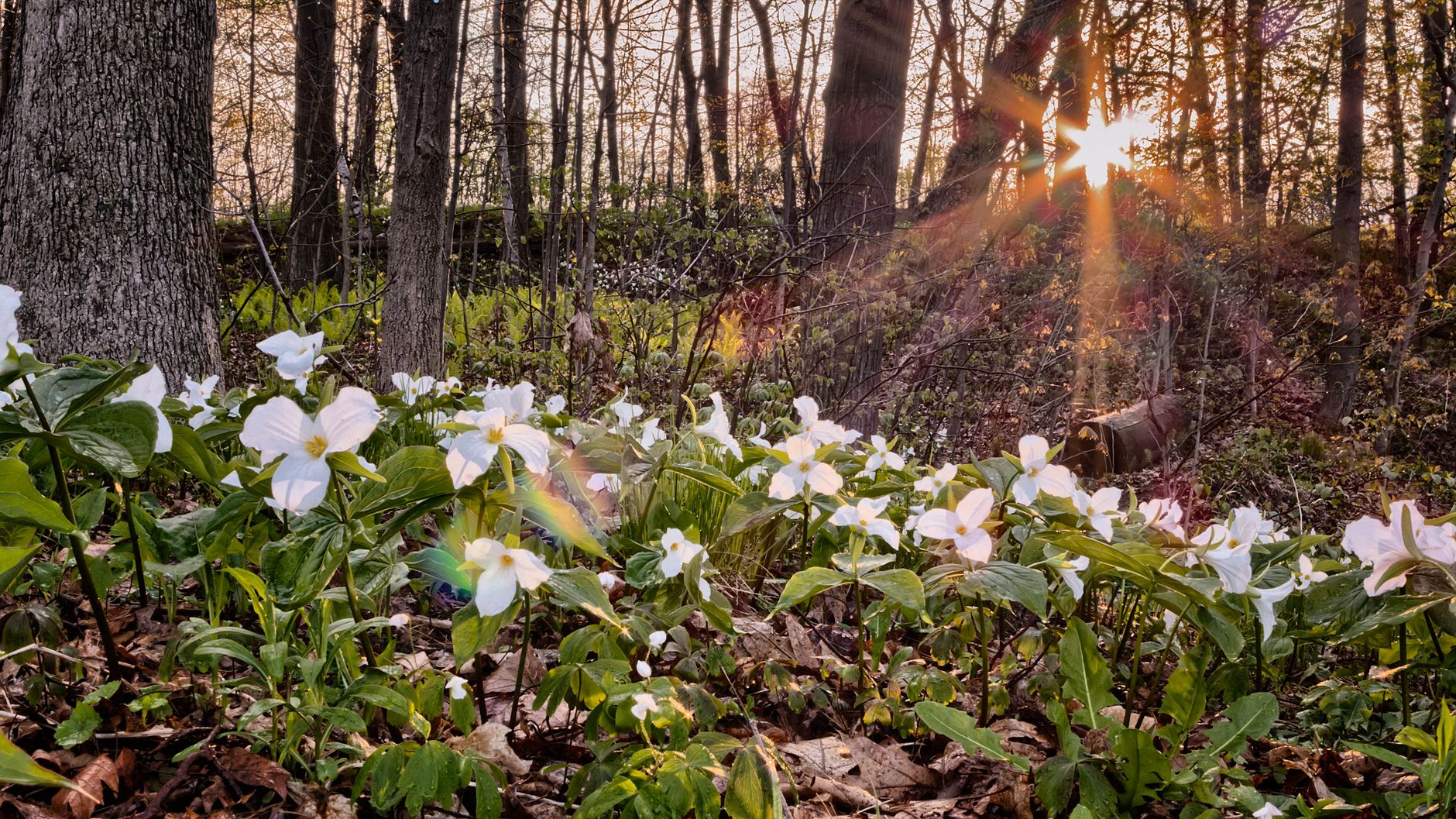
The Pacific trillium is the classic woodland wildflower of the Northwest: three leaves, three petals, and a flower that opens white and fades to pink as it ages. It grows in coniferous and mixed forests, often near alder thickets and shrubs, and it blooms in March or April, with sightings peaking in the first week of April according to citizen-science records. Some plants stay dormant underground for a year or more, so a flower that is missing one spring may simply be resting. Please leave them alone and take a photograph instead.
Oregon fawn lily
Also called the giant white fawn lily, this is a woodland and meadow lily from the west side of the Cascades. The nodding white flowers have yellow bases and petals that curl back, and the leaves are mottled with brown and white, which is where “fawn” most likely comes from. The flower faces the ground, so you often have to crouch to see it properly.
Camas
Camas is a bulb plant of seasonally moist meadows, the kind of ground that is wet in the spring and dries out later. It sends up a tall, spiky cluster of blue to violet flowers, and a meadow in bloom looks from a distance like water. Great camas grows two to four feet tall. The bulbs were an important food for Native peoples, who cooked them slowly in pits for a day or more, and caution matters here: camas has a deadly look-alike, meadow death-camas, so this is never a plant to dig up and eat. The U.S. Forest Service also strongly discourages collecting it from the wild.
Red-flowering currant
This shrub is a favorite with gardeners and hummingbirds. The flowers hang in dangling clusters, in red, pink or sometimes white, and open in early spring just as the leaves unfold. The young leaves have a strong resinous smell. It likes the moist lowlands west of the Cascades, tolerates drought once established, and later produces dark purple berries that birds and small animals eat. It is the shrub we would most often suggest for a yard that wants a sign of spring.
Oregon grape
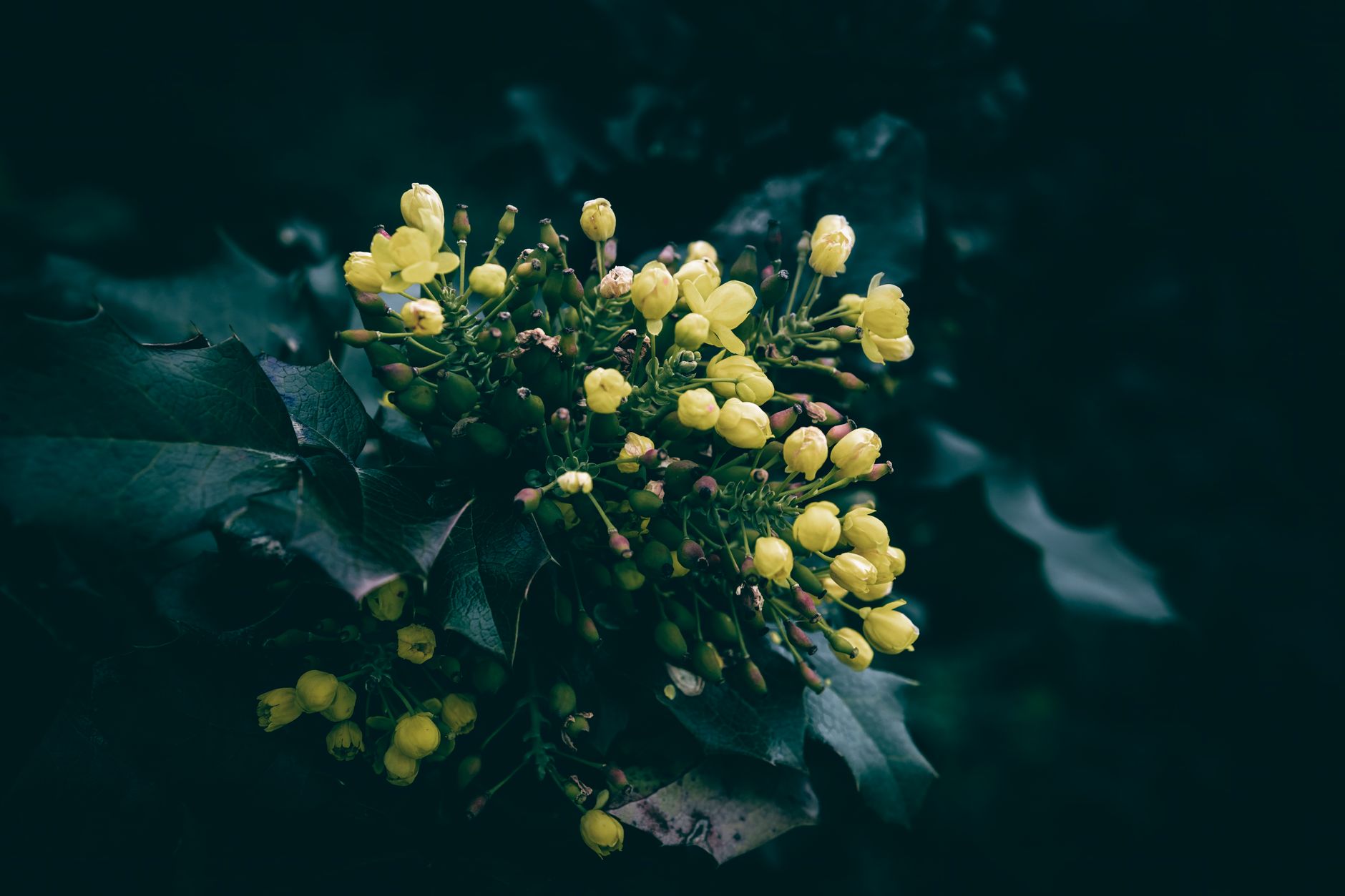
Oregon grape is the state flower of Oregon, a distinction it has held since 1899. It is an evergreen shrub with glossy, spiny leaflets that look like holly leaves, and dense clusters of yellow flowers from March to June, followed by dusty blue berries. Despite the name it is not a grape, and it is not related to holly either. The berries are very tart, and traditional diets used them in small amounts. It is also tough: it handles summer drought and poor soil, which is why you see it in parking-strip plantings as well as in the woods.
☀️ Early Summer: Pink Spires
Hardhack, or Douglas spirea
Hardhack forms thickets along streams and in wet, open ground such as marshes, and in early summer it sends up spires of small, deep pink flowers. The flowers feed hummingbirds, and the dark seed heads stay on the plant into winter, which gives small birds something to eat when food is scarce. Wrens and other birds nest in the thickets.
🍂 Fall and Winter: Berries, Red Twigs and Seed Heads
The color does not stop when the flowers do. In the cold months the shrubs along the water are the ones to watch.
Red osier dogwood
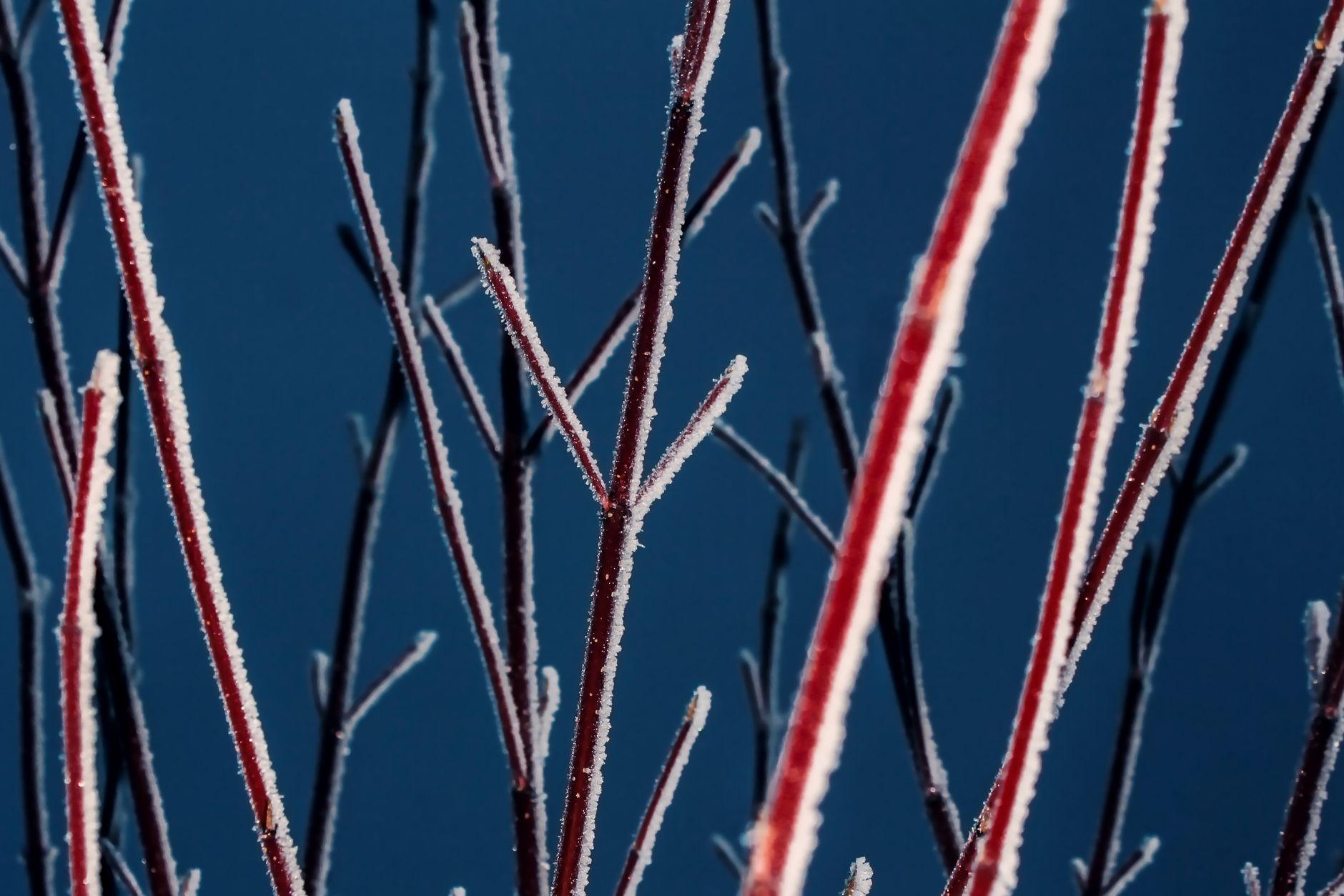
A creekside shrub that grows in wet, poorly drained soil and spreads into dense thickets. In late spring it has flat clusters of small dull-white flowers, and in fall the leaves turn red to purple. In winter, once the leaves drop, the bare twigs are a dark red that shows up well against gray weather, which is why it is planted so often in gardens. The white berries are an important autumn food for small mammals, bears and 47 species of birds. It is also the dogwood that crews use to hold stream banks in place, because cuttings root so readily.
Snowberry
Snowberry has small pink bell-shaped flowers in the warm months and, in fall, round white berries that are easy to recognize. It is an important cover and food plant for birds and small mammals, and was once a favorite around old farmhouses. The berries are poisonous to people and cause vomiting, so keep children from popping them in their mouths, and check our guide to which flowers are toxic to pets before you bring any wild stem indoors.
Red elderberry
Red elderberry carries bright red fruit in clusters. The berries look like candy and are poisonous raw, although they can be cooked, so treat them as something to admire. Birds will not be as careful.
📅 A Quick Calendar
- Late winter: skunk cabbage in wet shady ground, osoberry in bloom.
- March to April: Pacific trillium in the woods; Oregon grape and red-flowering currant starting.
- Spring: fawn lilies in woodland and meadow, camas in damp open ground, Oregon grape through June.
- Early summer: hardhack’s pink spires along the water; osoberry fruit ripens.
- Fall: dogwood and snowberry fruit, red elderberry, red-and-purple dogwood leaves.
- Winter: red dogwood twigs, evergreen Oregon grape, seed heads left standing.
🚫 How to Enjoy Them Without Picking Them
Wild plants are a shared resource, and a flower you pick is a flower the next family does not see. The Tualatin River National Wildlife Refuge is plain about it: visitors are asked not to collect anything from the refuge, including flowers or feathers. The same sense applies in city parks. Take photographs, learn the names, and leave the plants where they are.
If you would like some of this at home, there are better options than the roadside:
- Buy native plants from a nursery. Red-flowering currant, Oregon grape, red osier dogwood, snowberry and camas bulbs are all sold by native plant nurseries, and the U.S. Forest Service recommends buying from reputable suppliers rather than digging from wild populations.
- Cut from your own yard. Branches of early-blooming shrubs can be brought inside, and red dogwood stems are a classic winter addition to a holiday arrangement.
- Ask your florist. We use woodland greens, berries and branches in seasonal arrangements, and if you describe what you saw on a walk, we can build something in that spirit.
If a native garden appeals to you, our post on why the neighbor’s garden looks better covers spring gardening in the Portland metro, and our pollinator post explains how to feed the bees and hummingbirds that these plants support.
🧭 Where to Practice
The refuge is a good place to learn plants. The bioswale in the refuge parking lot is planted with native shrubs and wildflowers, so you can see some of them before you walk a step. The year-round trail is a two-mile out-and-back through oak and forested habitat to a wetland overlook, and the refuge’s seasonal trail is open from May 1 through September 30. Pets are not allowed on the refuge. Our post on the Tualatin River refuge has more on the visit.
❓ Quick Questions
What is the first native flower to bloom around Tigard?
Skunk cabbage and osoberry are among the first, in late winter, with Pacific trillium following in March and April.
Can I pick wildflowers in a Tigard park?
It is best not to. Leave wild plants where they are, take photographs, and buy native plants from a nursery if you want them at home.
Which of these plants are poisonous?
Snowberry berries, red elderberry raw, and skunk cabbage are all harmful if eaten, and camas has a deadly look-alike. Do not eat any wild plant unless you are certain what it is.
What is Oregon’s state flower?
Oregon grape, recognized in 1899.
Which of these is easiest to grow in a yard?
Oregon grape and red-flowering currant both handle summer drought, and red osier dogwood is hardy and gives winter color.